Snake-like flexible manipulators (FMs) are very important in minimally invasive surgery (MIS). However, existing solutions lack adequate dexterity as they can only control either the angulation or the length of the bending section. Moreover, they cannot “follow the leader”, which is critical in neurosurgeries. This paper intends to provide a design to solve such problems. A novel teleoperated tendon-driven surgical arm system is developed. It includes a constrained tendon-driven serpentine manipulator (CTSM) and the Novint Falcon haptic input device. An optimal trajectory tracking method is proposed for the CTSM. Two modes of teleoperation for the CTSM are implemented. One is direct mapping mode and the other is in incremental mode. In the CTSM both the angulation and the length of the bending section are controllable, which endows the CTSM larger workspace and better dexterity than existing counterparts. In the L shape trajectory tracking, the CTSM can nearly “follow the leader”. What’s more, the stiffness and stability are optimized in the meantime. The CTSM can be operated in the two modes effectively. The direct mapping mode is well suited for fast moving and the incremental mode provides fine adjustment.
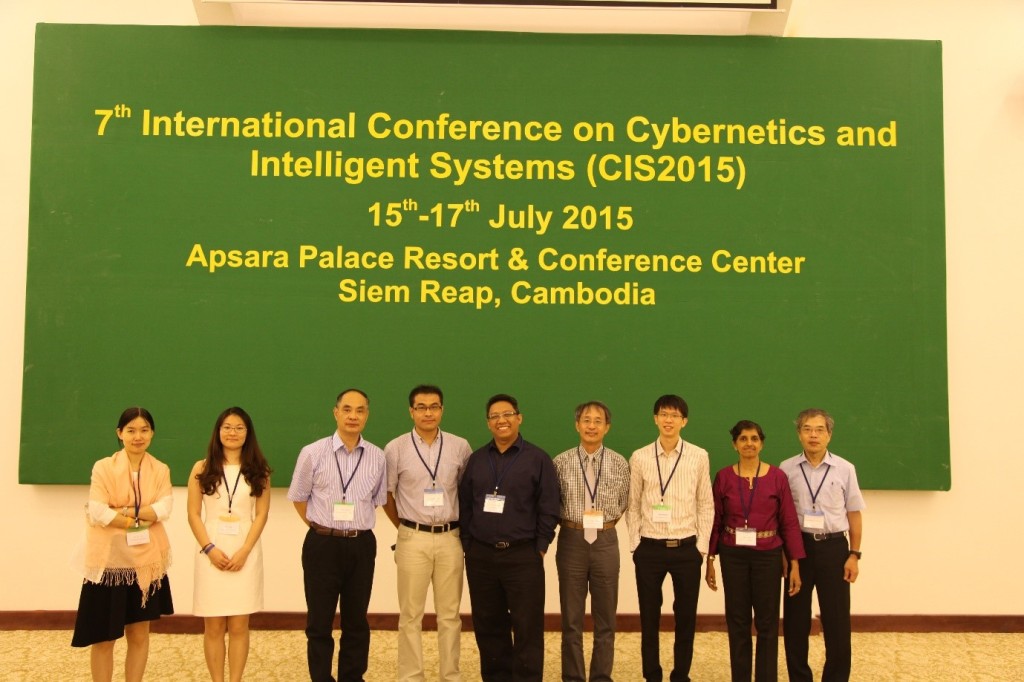
Zheng Li, Feiling Jan, Hongliang Ren and Haoyong Yu, A Novel Tele-operated Flexible Surgical Arm with Optimal Trajectory tracking Aiming for Minimally Invasive Neurosurgery
Shen Shen, Shuang Song, Jingling Zhu, Max Q-H Meng, Jun Li and Hongliang Ren, Preliminary Design towards a Magnetic Actuated Drug Delivery System
Rui Ma, Hui Cao, Shuzhi Sam Ge and Hongliang Ren, Kernel neighbor density with parallel computing mechanism for anomaly detection algorithm
Hui Cao, Bo Zhou, Shuzhi Sam Ge and Hongliang Ren, Towards Low-cost Contactless High-Temperature Estimation Based on Colorimetric Fusion
Nasopharynx cancer, or nasopharyngeal carcinoma (NPC), is a tumor that originates in the nasopharynx, the uppermost region of the pharynx where the nasal passage and the throat join. It is a common disease occurring to ethnic Chinese people living in or emigrating from southern China; it is also the eighth most frequently occurred cancer among Singaporean men. Traditional posterior nasopharyngeal biopsy using a flexible nasal endoscope has the risks of abrasion and injury to the nasal mucosa and thus causing trauma to the patient. Therefore, the goal of this project is to develop a compact continuum tubular robotic system to achieve collision free nasopharyngeal biopsy.
Fig.1 Illustration of the proposed CTR for nasopharyngeal biopsy.
Approaches
We developed a compact CTR which is 35 cm in total length, 10 cm in diameter, 2.15 kg in weight, and easy to be integrated with a robotic arm to perform more complicated operations.
Fig.2 The proposed continuum tubular robot
Fig.3 Compact and light weight CTR integrated with a positioning arm for
better conducting surgery
We also developed a 3D printed biopsy needle to equip our robot for transnasal biopsy procedure.
Fig.4 3D printed biopsy needle for transnasal biopsy
The workspace of the robot was analyzed to determine optimized tube parameters.
Fig.5 Workspace comparison for 3-DOF CTR with three initial configurations.
Top: all the outstretched part of the inner tube exposes; Middle: the outstretched part of the inner tube is partially covered by the outer tube; Bottom: the outstretched part of the inner tube is totally covered by the outer tube.
Further more, by using an electromagnetic tracking system, we are able to build a navigation system with shape reconstruction for the tubes.
Fig.6 Shape reconstruction using 3-order Bézier curve fitting
Fig.7 Sensing by EM tracker
Fig.8 Navigation interface
Results
Three groups of experiments were carried out. The first group is to tele-operate the robot to follow a linear path and a circular path. We found that the path following accuracy was about 2 mm.
Fig.9 Tele-operating the robot to follow a linear path and a circular path
Fig.10 Accuracy of the robot following the predefined paths
The second group is to validate the shape reconstruction algorithm. The accuracy of the results is about 1 mm.
Fig.11 Reconstruction setup
Fig.12 Reconstruction error
In the last group of experiments, the robot was tested in a biopsy procedure on a cadaver. The feasibility of the proposed robotic system was validated.
Fig.13 Cadaver experiment setup
Fig.14 Cadaver experiment process
People Involved
Research Fellow: Liao Wu
PhD Student: Keyu Wu
FYP Student: Li Ting Lynette Teo
Intern Student: Jan Feiling and Xin Liu
Project Investigator: Hongliang Ren
Publications
[1] Liao Wu, Shuang Song, Keyu Wu, Chwee Ming Lim, Hongliang Ren. Development of a compact continuum tubular robotic system for nasopharyngeal biopsy. Medical & Biological Engineering & Computing. 2016.
[2] Keyu Wu, Liao Wu, Hongliang Ren. Motion planning of continuum tubular robots based on features extracted from statistical atlas. In: Proceedings of 2015 IEEE International Conference on Intelligent Robots and Systems (IROS 2015).
[3] Keyu Wu, Liao Wu, Chwee Ming Lim, Hongliang Ren. Model-free image guidance for intelligent tubular robots with pre-clinical feasibility study: towards minimally invasive trans-orifice surgery. In: Proceedings of 2015 IEEE International Conference on Information and Automation (ICIA 2015). ( best paper finalist)
[4] Benedict Tan, Liao Wu, Hongliang Ren. Prototype development of a handheld tubular curvilinear robot for minimally invasive surgery. In: The 11th Asian Conference on Computer Aided Surgery (ACCAS 2015).
[5] Keyu Wu†, Liao Wu†, Hongliang Ren. An image based targeting method to guide a curvilinear concentric tube robot. In: Proceedings of 2014 IEEE International Conference on Robotics and Biomimetics (ROBIO 2014). Bali, Indonesia, 2014: 386-391 († equally contributed author).
The 11th Asian Conference on Computer Aided Surgery (ACCAS2015) was held in Singapore on July 9-11, 2015 at National University of Singapore. During the conference, international academic researchers, clinical scientists, surgeons and industrial partners presented and discussed their key innovations in the fields of surgery, engineering, informatics and healthcare. Our team presented our recent research outcomes and demonstrated the research platforms in our lab to the invited scholars from UK, China & Japan.
The presentations from our group:
Ang, B. & Ren, H. Towards Virtual Operation using Leap Motion and Vibrotactile Haptic Feedback
Li, Z.; Oo, M. Z.; Thang, V. D.; Nalam, V.; Kofidis, T.; Ren, H. & Yu, H. Design and Testing of a Novel Flexible Endoscope
Loh, K. T.; Ren, H. & Li, J. Tracking Magnetic Particles under Ultrasound Imaging using Contrast-Enhancing Microbubbles
Tan, B.; Wu, L. & Ren, H. Prototype Development of a Handheld Tubular Curvilinear Robot for Minimally Invasive Surgery
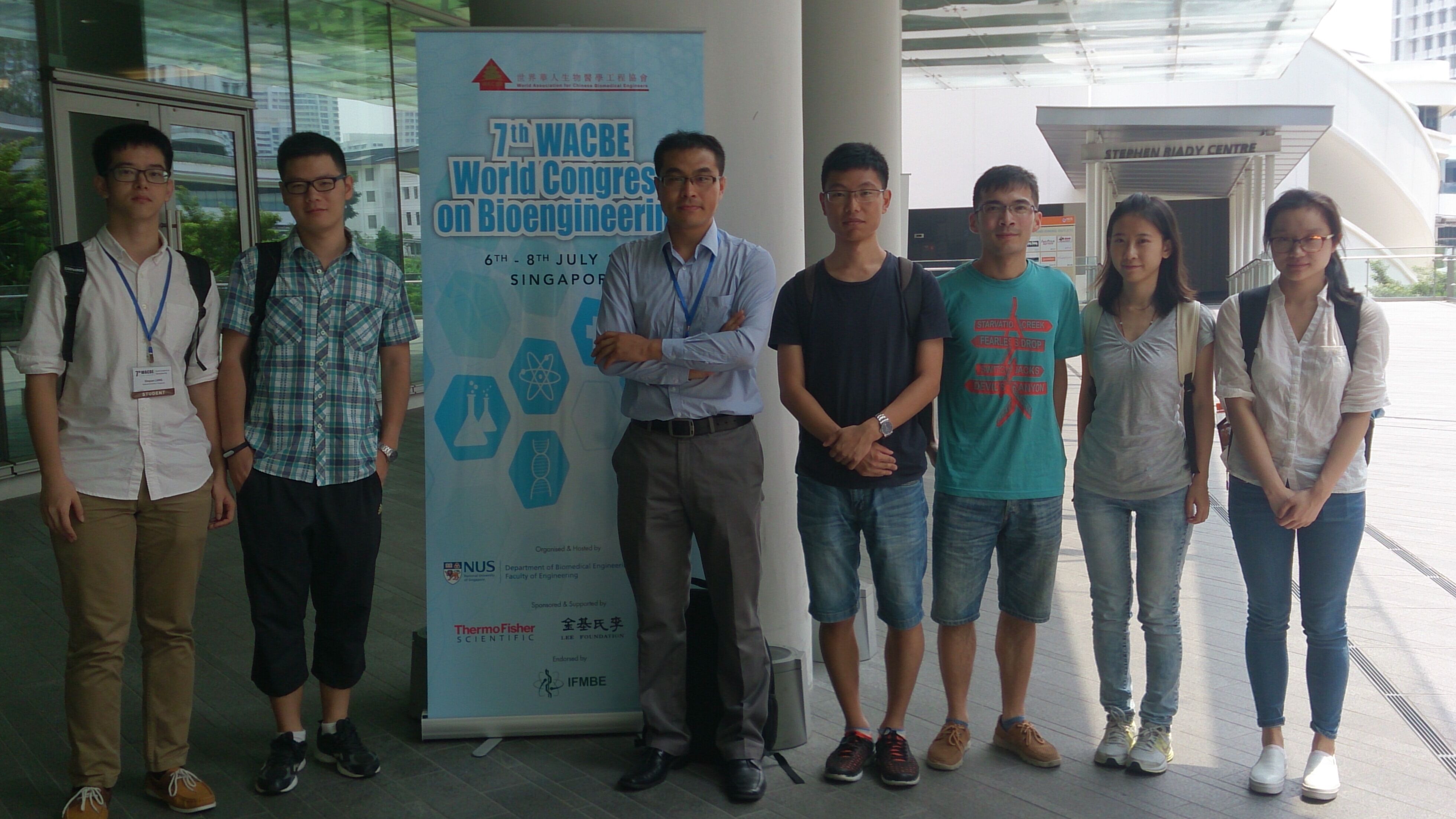
This year, WACBEWorld Congress on Bioengineering 2015 (WACBE 2015), was held in Singapore, from 6 to 8 July 2015. Many biomedical engineers from over the world were brought together to share their experiences and opinions on the development of biomedical engineering.
During the conference, Xinquan, our PhD student, presented the paper titled ‘Towards A Micro Pneumatic Actuator with Large Bending Deformation For Medical Interventions’ and Wenjun, another PhD student from our group, presented the paper titled ‘Indirect Distal End Force Sensing for a Tendon Driven Flexible Transoral Surgical Manipulator’.
A constrained tendon-driven serpentine manipulator is developed in our previous work, high level intelligence is expected to make manipulator system working autonomously. Considering the limited and confined working space of surgical operation, this project is aim to develop novel motion planning techniques for our surgical tendon-driven serpentine manipulator, which is expected to assist surgeon operation more accurate and convenience.
Approaches
In the clinical environment, chances are high that the manipulator may bump into neighboring tissue and organs and cause additional damages. For medical manipulator working within human body, optimal and accurate trajectory planning is the key enabler of surgical security because of any additional damage to proper functioning organs is intolerable. Moreover, the surgery usually has many additional disturbances including breathe, physical hand tremor and tiny displacement of the organs. These uncertainties require the planning algorithm to have good robustness to avoid damaging the proper functioning organs. As the most important factor that can lower the risk of additional damages, less sweeping area of manipulator motion results in more disturbances tolerance capability. Especially when energy cost of different planned trajectories are in the same level, the less sweeping area of whole manipulator body becomes more attractive for physician and reduce unpredictable risks in transoral procedure applications. Therefore, we propose a three dimensional neural dynamic planning algorithm which introduces sweeping area as a very important factor in neural stimulation propagation.
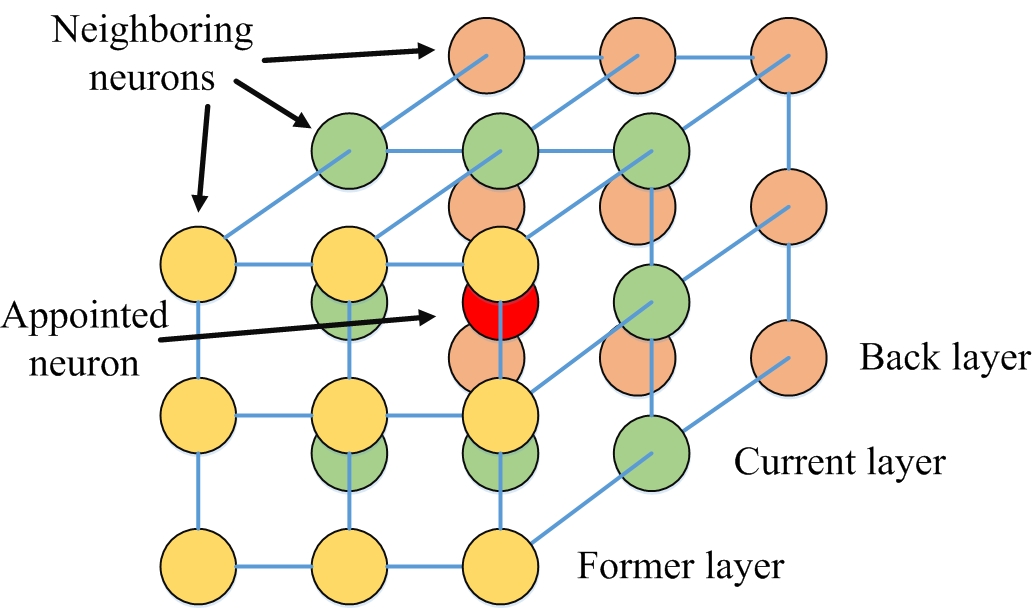
The three dimensional neural network is show in Figure 1, each neuron is connected with its adjacent 26 neurons. In our minimum planning model, the start state with highest activity propagates stimulation to whole network through connective weight. On the other hand, the configuration parameters representing obstacle collision hold the lowest value and do not connect with neighboring neurons. As a result, the neural stimulation spread as water ran down from a height place in planning neural dynamic field building, which is shown in Figure 2. Simultaneously, the robot starts from target state and looks for the highest state as climbing mountain. When robot reach the start state configuration parameter, the planning is finished. Then, the final motion sequence will be obtained by reversing the planned trajectory, which is from start state to target state.
Fig.1 Three dimensional neural dynamic model
Fig.2 Neural dynamic field, which stimulation spread from start state to whole map.
Results
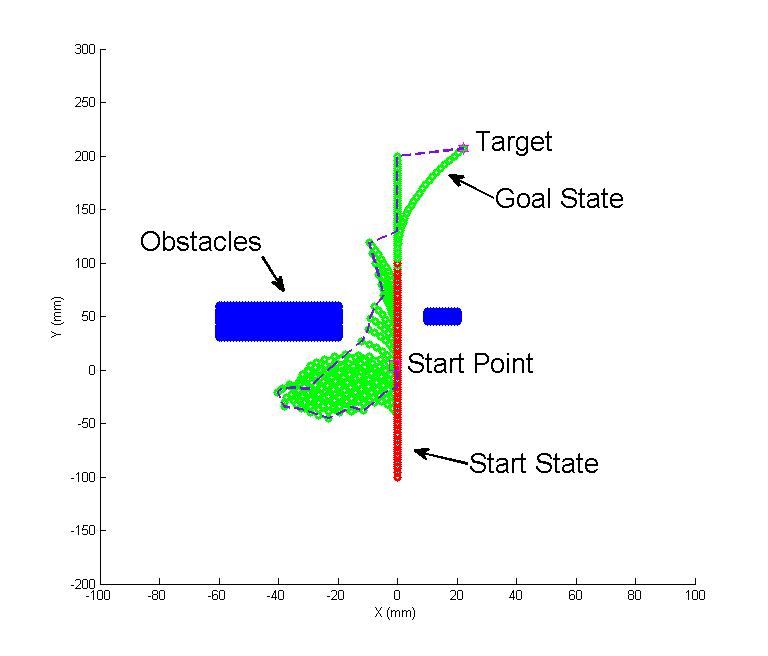
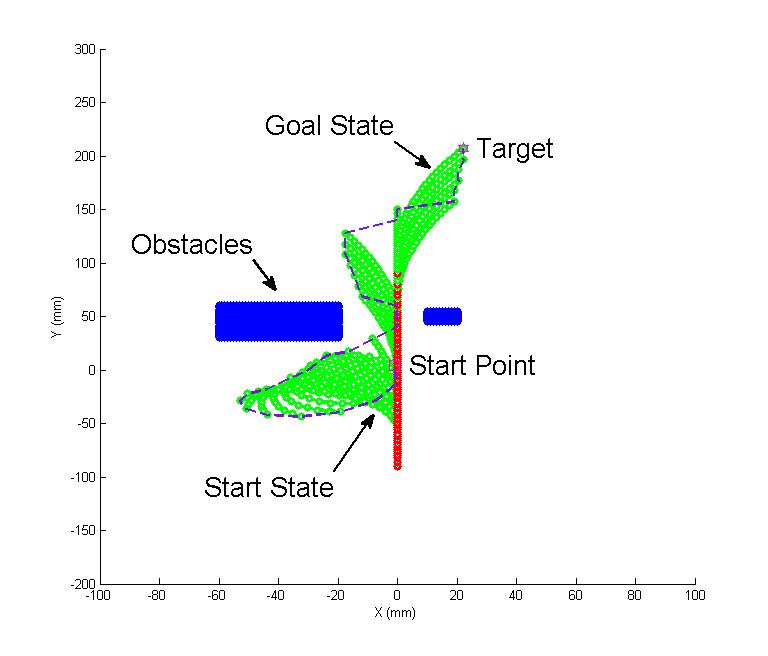
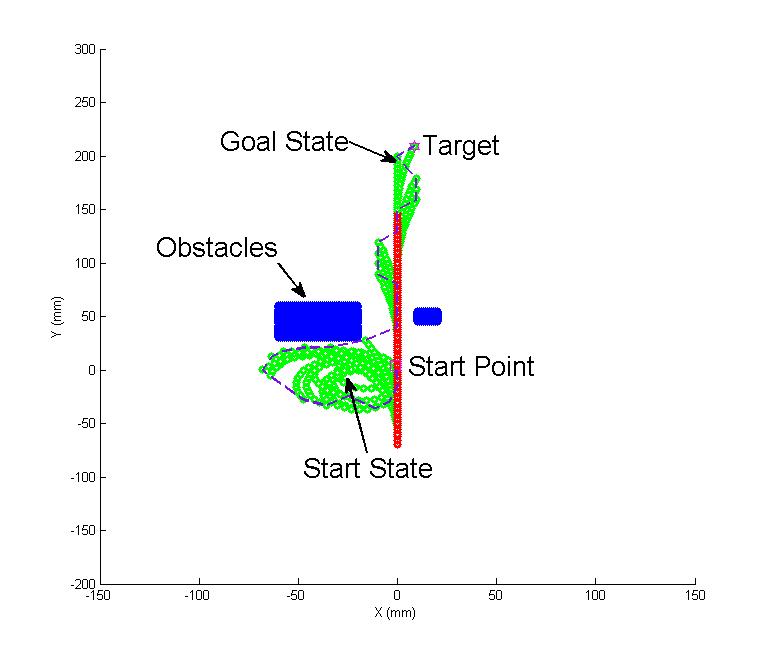
At first, we test our planning algorithm in representative simulation scenarios and compare with other famous planning algorithms, such as traditional neural dynamic planning algorithm, RRT and RRT*.
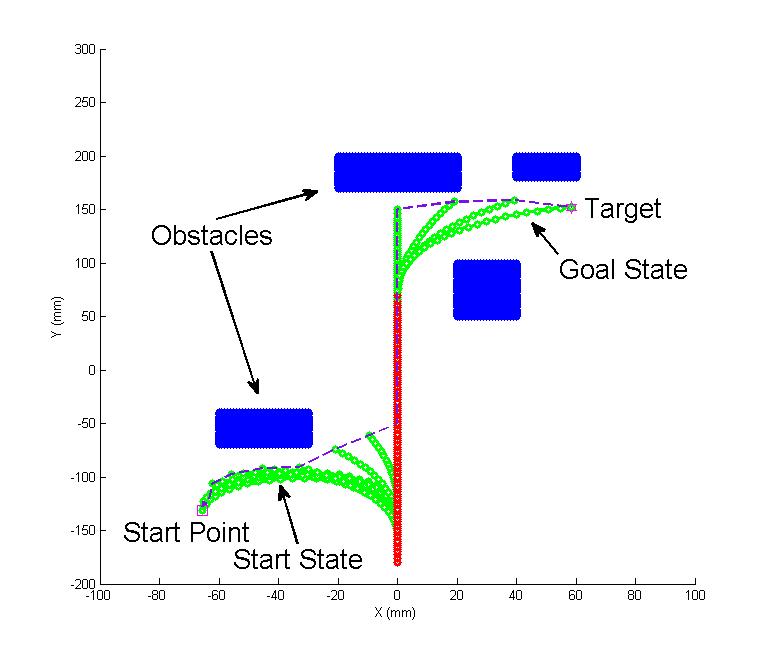
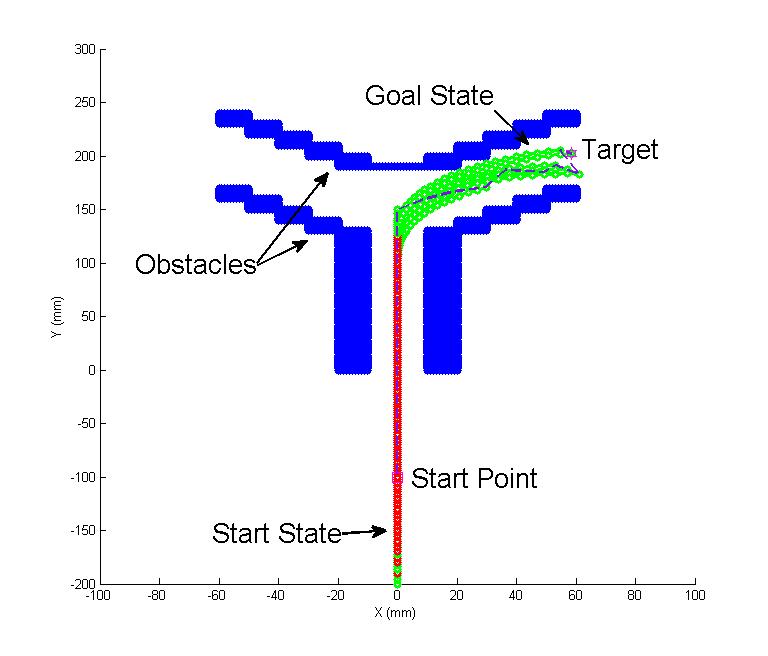
(a) Minimum sweeping area planning algorithm
(b) Neural dynamic algorithm
(c) RRT*
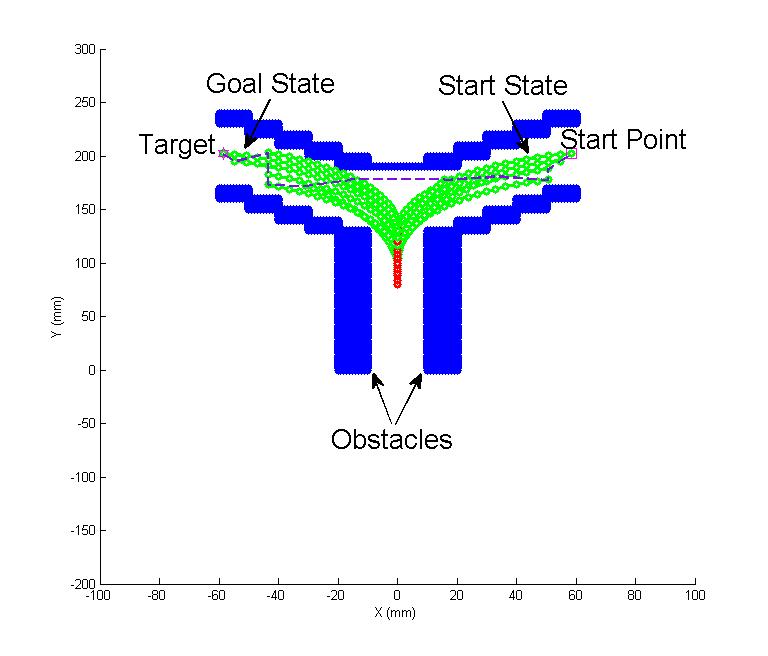
Fig.3 Simple case: a comparison simulation on a simple scenario consisting of two obstacles in the middle of the map is used for first test. The tendon-driven serpentine manipulator is left bended at the beginning and expected to reach the upper right target point. The manipulator is presented by green color (free bending segments) and red color (constrained bending segments). The distal tip trajectory is presented by a dash line. The performance of different planning algorithms in terms of sweeping area and obstacle avoidance ability are shown. Particularly, the area of green parts can be seen as the sweeping area of manipulator approximately
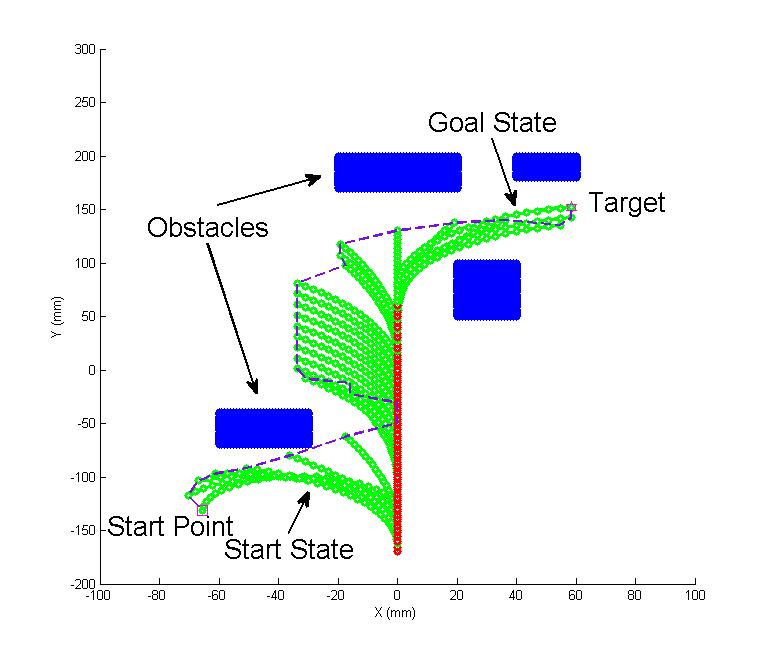
(a) Minimum sweeping area planning algorithm
(b) Neural dynamic algorithm
(c) RRT*
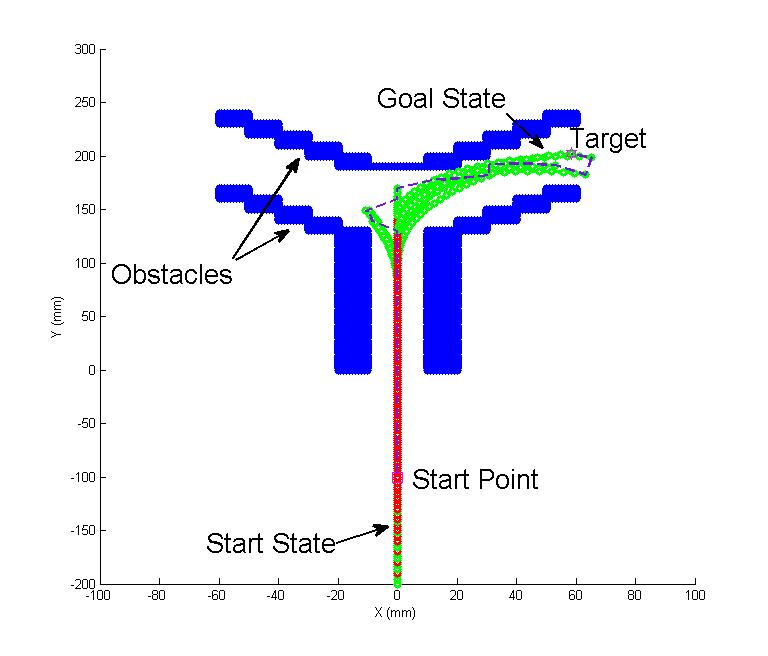
Fig.4 Complex case: a comparison simulation on a complex scenario consisting of four obstacles are used for test. The
tendon-driven serpentine manipulator is left bended at the beginning and expected to reach the target point surrounded by three obstacles in the upper right area. The differences in sweeping area and obstacle avoidance ability are shown obviously among different algorithms guidance.
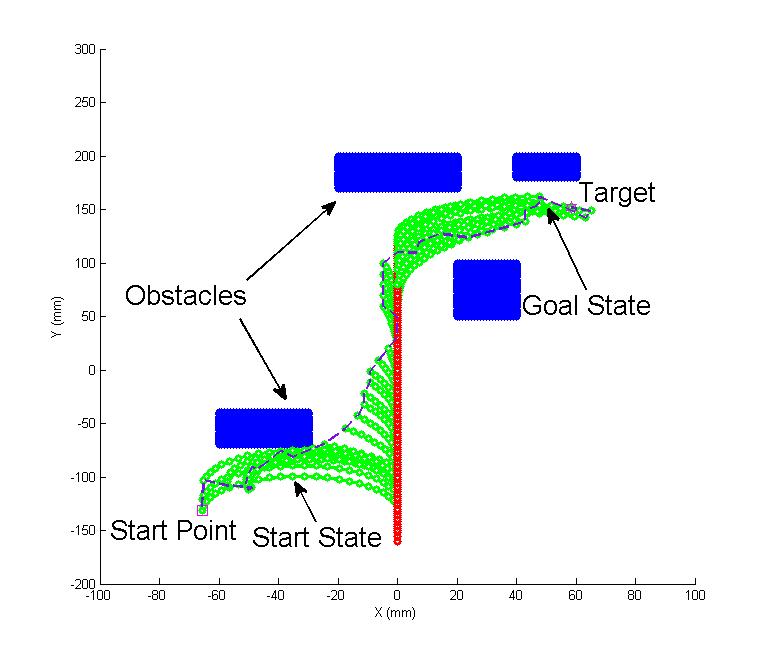
(a) Minimum sweeping area planning algorithm
(b) Neural dynamic algorithm
(c) RRT*
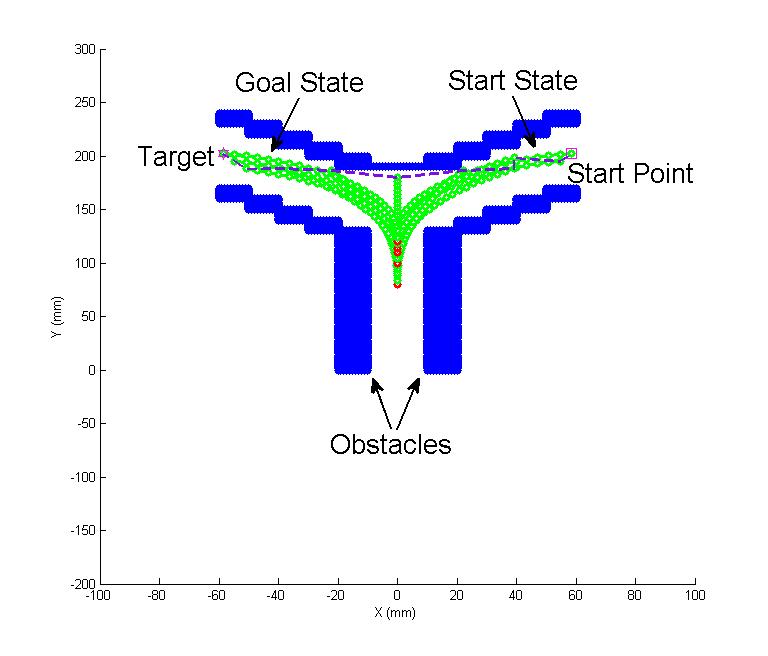
Fig.5 Tubular case 1: A virtual tubular clinical map in simulation is conducted in advance, where target is at the right side sub-branch. The tendon-driven serpentine manipulator is straight on the bottom of the tubular at the beginning.
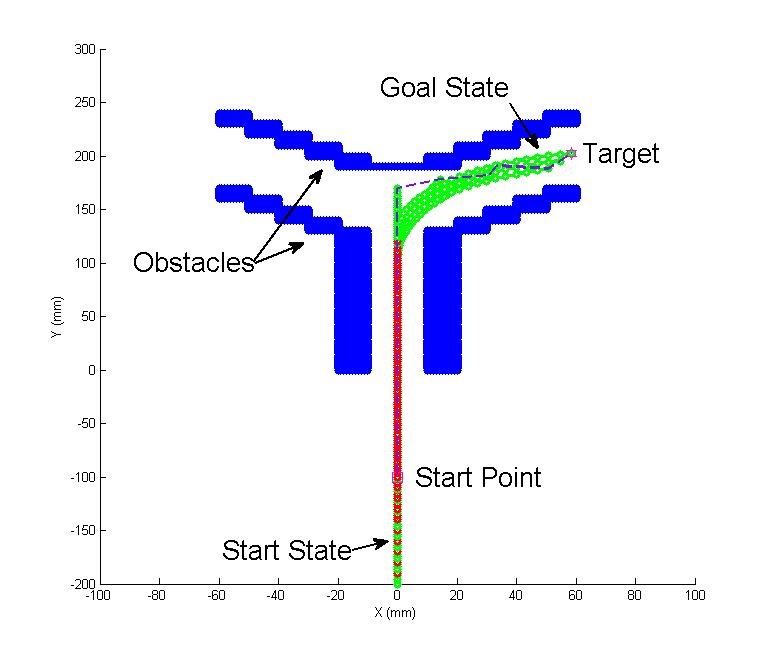
(a) Minimum sweeping area planning algorithm
(b) Neural dynamic algorithm
(c) RRT*
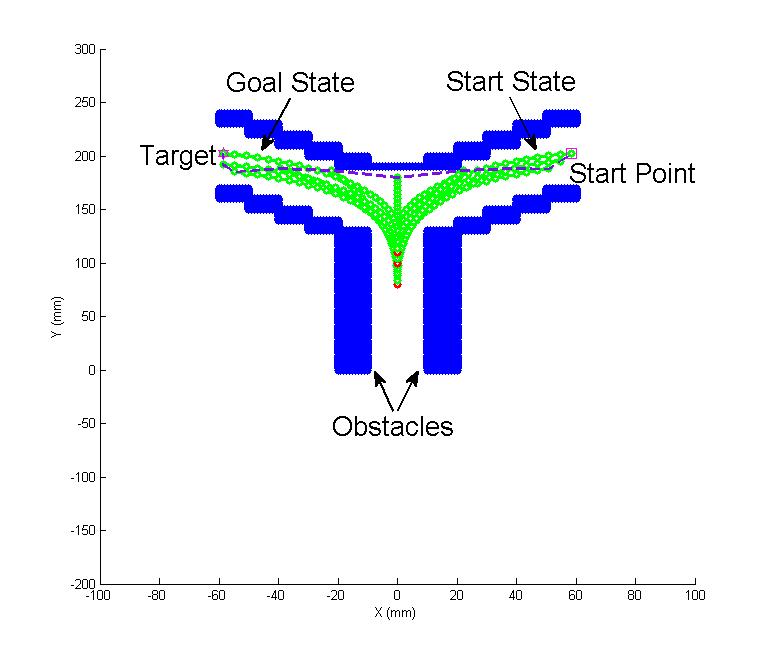
Fig.6 Tubular case 2: The same virtual tubular clinical map as Tubular case 1, but target is at the left side sub-branch and start point at the right side sub-branch. The tendon-driven serpentine manipulator is expected to move from right sub-branch to left one as manipulator moving in clinical operation.
Moreover, experiments are conducted in environments built by Lego blocks, where obstacle configurations are similar to simulation cases. In this experiment stage, the tendon-driven serpentine manipulator is expected to execute same motion sequences that are generated from complex case, tubular case 1 and tubular case 2 in simulation studies. The experimental results in phantom test are shown in video 2 (Phantom test on Lego bricks).
Finally, a preliminary transoral trials on cadaver human head is conducted to at Khoo Teck Puat Advanced Surgery Training Centre (ASTC), National University of Hospital, Singapore. The panorama of cadaver transoral experiments can be found in video 3. The operations on compute and corresponding softwares are shown in video 4. The experimental data are ploted by MATLAB, and four algorithms comparisons are shown in video 5.
[1] Yanjie Chen, Zheng Li, Wenjun Xu, Hang Zhong, Yaonan Wang and Hongliang Ren, “Minimum Sweeping Area Motion Planning for Flexible Serpentine Surgical Manipulator with Kinematic Constraints”, IEEE/RSJ Int. Conf. on Intelligent Robots and Systems (IROS 2015), Accepted.
[2] Yanjie Chen, Wenjun Xu, Zheng Li, Shuang Song, Chwee Ming Lim, Yaonan Wang, and Hongliang Ren, “Safety-Enhanced Motion Planning with Minimum Sweeping Area for Flexible Surgical Manipulators using Neural Dynamics”, IEEE Transactions on Cybernetics, Submitted.
Videos
-Support powerpoint.
-Phantom test on Lego bricks.
-The panorama of cadaveric transoral experiments.
-The compute vision and corresponding software during clinical experiments.
Our project on intelligent tube robot was invited to demo at the COLLABORATIVE RESEARCH MEETING WITH NUH NEUROLOGY AND NEUROSURGERY at SINAPSE this Friday.