Too realistic to be true: The most scary robot show and we could use this for future cadaver studies
This is a pneumatic driven robotic head phantom demonstrated by Disney Research in ICRA 2015 exhibition @ Seattle.


Too realistic to be true: The most scary robot show and we could use this for future cadaver studies
This is a pneumatic driven robotic head phantom demonstrated by Disney Research in ICRA 2015 exhibition @ Seattle.
Magnetic actuation is an efficient way for wireless manipulation of micro-robots. One key factor for the actuation is determining of the magnetic field components and the field gradients of electromagnetic coils. Usually, magnetic dipole model or interpolation method is used to calculate the magnetic field. These methods are not well suitable for estimation of the magnetic field. In this paper, we present a mathematic magnetic field model of rectangular electromagnetic coils for magnetic actuation. The proposed model is based on the Biot-Savart Law and superposition principle. Finite element software is used to verify the proposed model. The final analytical expressions are given and simulation results show the feasibility of the method.
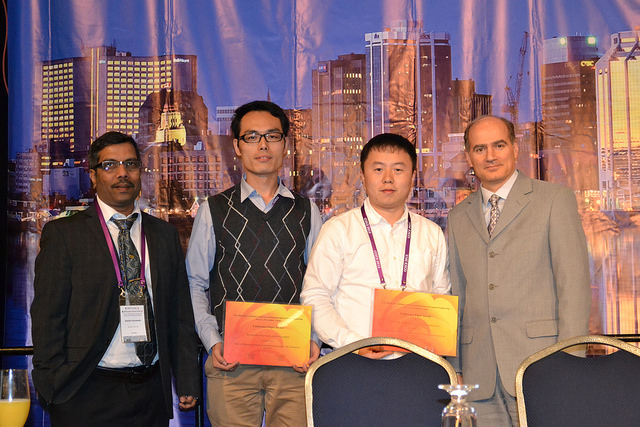
Our team won two conference paper awards at the recent IEEE CCECE (IEEE Canadian Conference on Electrical and Computer Engineering) conference held in Halifax, Canada.
J. Feiling, Z. Li, H. Yu & H. Ren ” Optimal Teleoperation Control of A Constrained Tendon-driven Serpentine Manipulator” CCECE 2015, IEEE Canadian Conference on Electrical and Computer Engineering
S. Song, H. Yu & H. Ren ” Study on Mathematic Magnetic Field Model of Rectangular Coils for Magnetic Actuation” CCECE 2015, IEEE Canadian Conference on Electrical and Computer Engineering
More information about the two award-winning papers can be found from our lab project page.
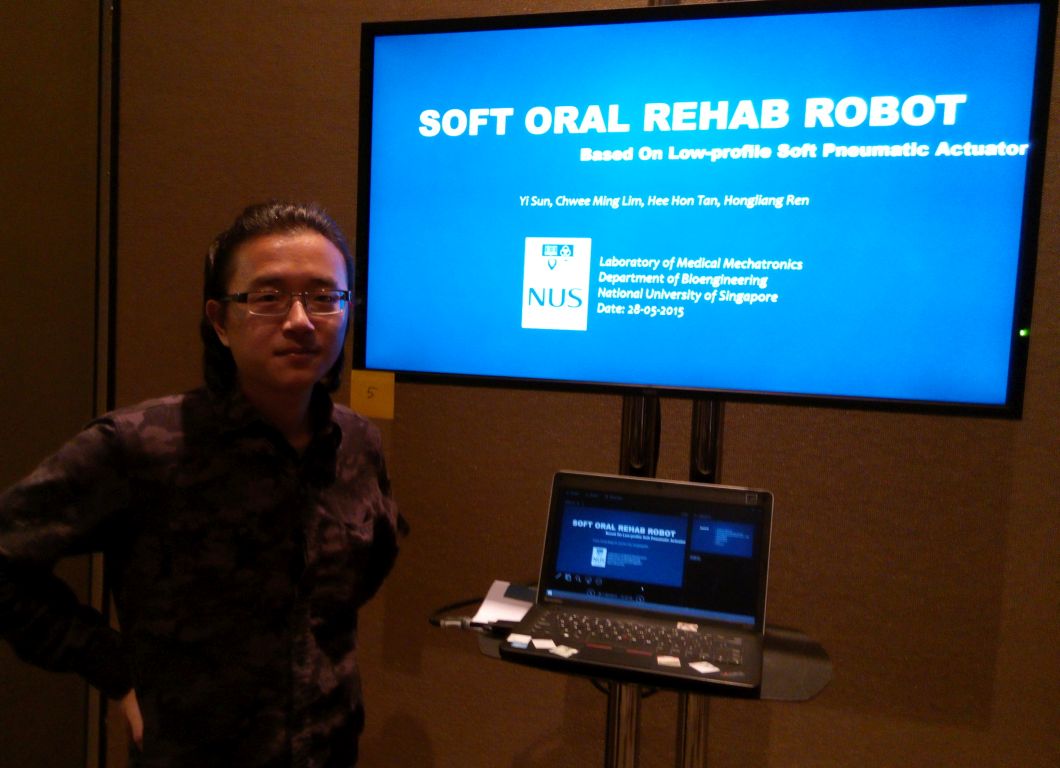
(May 2015) Dr. Ren and our PhD student, Mr. Sun Yi attended the annual ICRA (IEEE International Conference on Robotics and Automation) conference at Seattle, USA, and presented our two accepted papers in visual tracking and soft robotics in medicine, respectively.
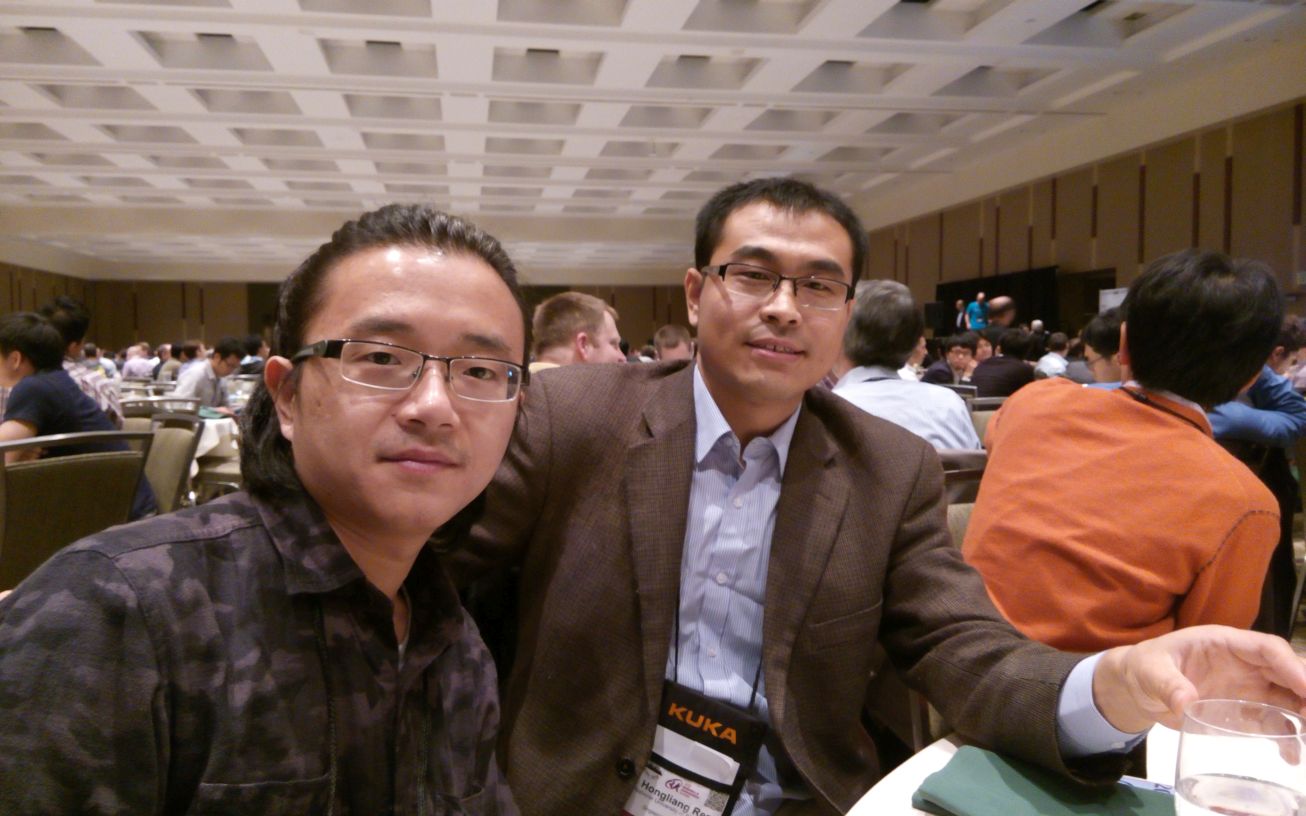
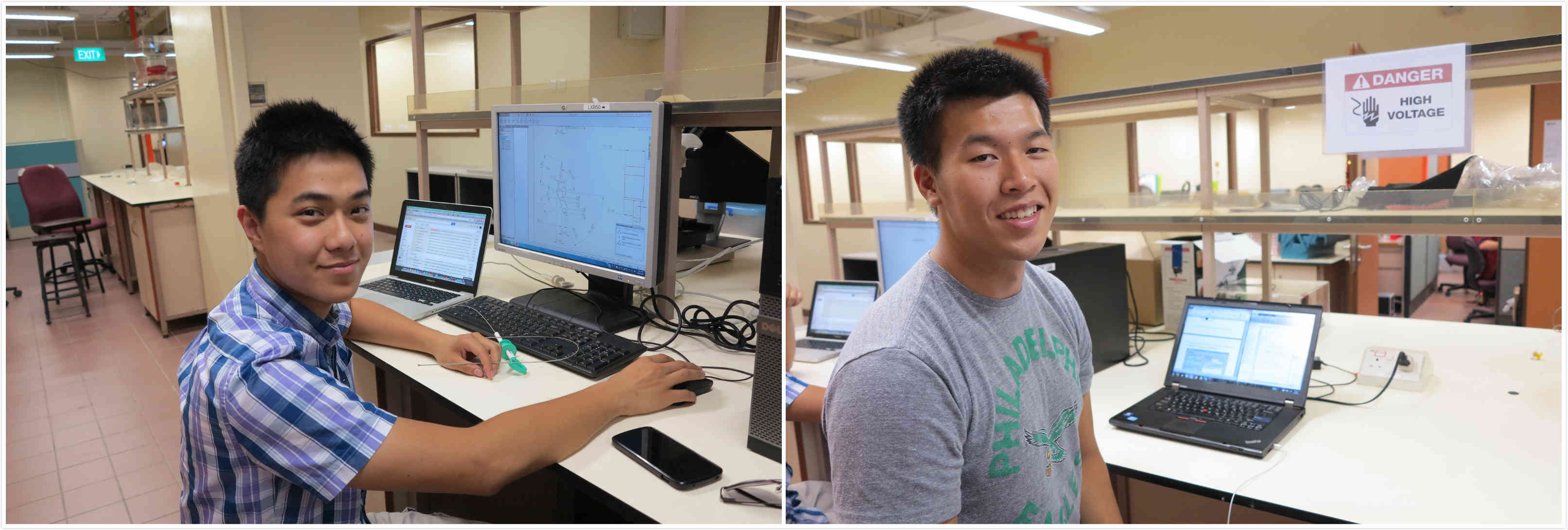
A warm welcome to our visiting students, Victor Hoang and Rock Zhang from UIUC and UPitt, USA, respectively. They will participate the research projects in surgical navigation and robotics for 2 months.
The objectives of this project are to design and evaluate the performance of an electromagnetic actuated (EMA) drug delivery system and explore the related issues.
The EMA system consists of magneto-responsive microcapsules as drug carriers, a coil system with controlled currents flowing through, as well as a tracking algorithm for close loop feedback control.
The magneto-responsive and thermal sensitive microcapsules are prepared through an encapsulator. The properties can be further utilized for controlled drug release. The encapsulated microbubbles are prepared based on a gas foaming technique for enhancing the ultrasound imaging contrast.
The coil system consists of 2 Helmoholz coil pairs and 2 Maxwell coil pairs are fabricated with printed aluminum skeleton and copper wires. A current control system including 3 DC motor governors and a USB to RS485 converter are added to realize programmable current control. Hence, the magnetic fields generated by the coils are controlled by the signals sent by the computer. Figure 1 shows the principle of actuation over the microcapsules.

Fig. 1: Principle of Magnetic Actuation over the Microcapsules
Figure 2 shows the preliminary set up for actuation over microparticles within the region of interest.

Fig. 2 Setup for Microparticles Actuation
Microcapsules with evenly distributed magnetic stripes have been fabricated. The stripes make the spherical microcapsules asymmetric so that their locomotion control is directed. Alignment and movement of the microcapsules are observed in the EMA system under DC output, while rotation is observed under sinusoidal output current.

Fig. 3 Microcapsules with magnetic CI strips. Scale bar: 200μm.

Fig.4 Magnetic actuation with (A)small cylindrical magnet and (B)magnetic microcapsules
Staff: Shen Shen, Song Shuang and Zhu Jingling
PIs: Ren Hongliang and Li Jun
1.Shen Shen, Shuang Song, Jingling Zhu, Max Q-H Meng, Jun Li and Hongliang Ren, Preliminary Design towards a Magnetic Actuated Drug Delivery System, 7th IEEE International Conference on Cybernetics and Intelligent Systems and the 7th IEEE International Conference on Robotics, Automation and Mechatronics, 2015.

Magnetic microbubbles which can be controlled by an external magnetic field have been explored as a method for precise and efficient drug delivery. In this paper, a technique for the fabrication of microbubble encapsulated magnetic spheres is presented. The resultant magnetic spheres were subsequently imaged using ultrasound and the encapsulated microbubbles proved to appear as bright spots and resulted in enhanced ultrasound image contrast, as compared to the solid magnetic spheres which appeared dull. A tracking algorithm was then developed for the tracking of the magnetic microbubbles based on optical flow tracking. Further development of the magnetic microbubbles and tracking algorithm can lead to future use of the tracking algorithm in the case of in vivo injection of the magnetic microbubbles.
1. Loh Kai Ting, Ren Hongliang and Li Jun, Tracking Magnetic Particles under Ultrasound Imaging using Contrast-Enhancing Microbubbles, The 11th Asian Conference on Computer Aided Surgery, 2015.

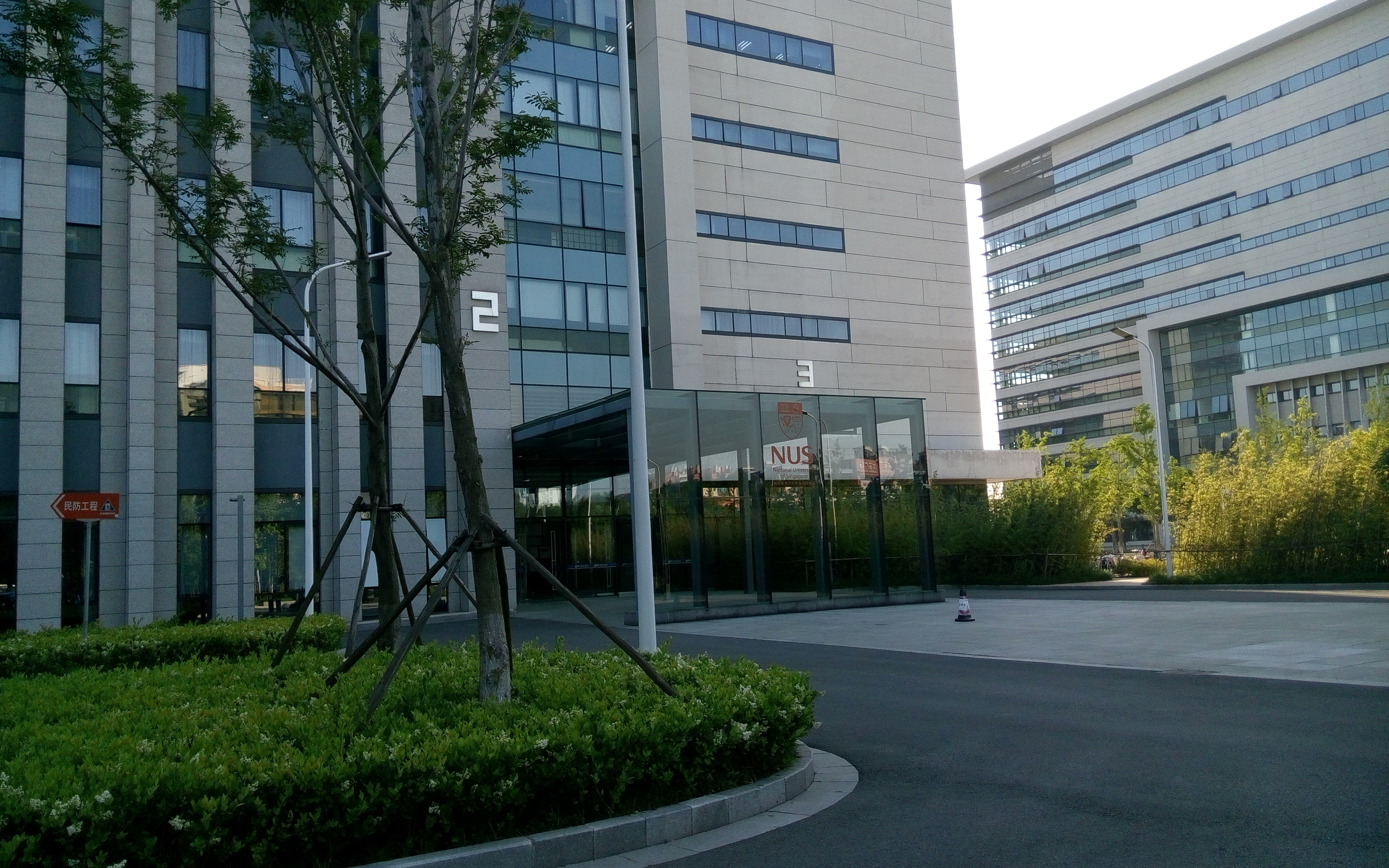
(May 2015) Dr. Hongliang REN and our PhD student Xu Wenjun paid a visit to Soochow University and NUSRI at Suzhou on May 21, 2015. Dr. Ren gave a talk on surgical robotics to the professors and research staffs of Robotics and Micro system Laboratory at Soochow University. Based on shared interest, the two labs will be initiating collaboration on robotics research in the near future. The same research team also founded HuiBo Robotics, one of the leading robotics companies in China and a good example of technical translation in the robotics industry. Dr. Ren was presented with some of the most exciting robotics platforms developed by the company. Located in SIP (Singapore Industrial Park),Suzhou, NUSRI was the last stop of the tech tour. As a NUSRI PI, Dr. Ren was happy to have discussions with the team there on future development of NUSRI as well as conducting research projects there.
 News
News