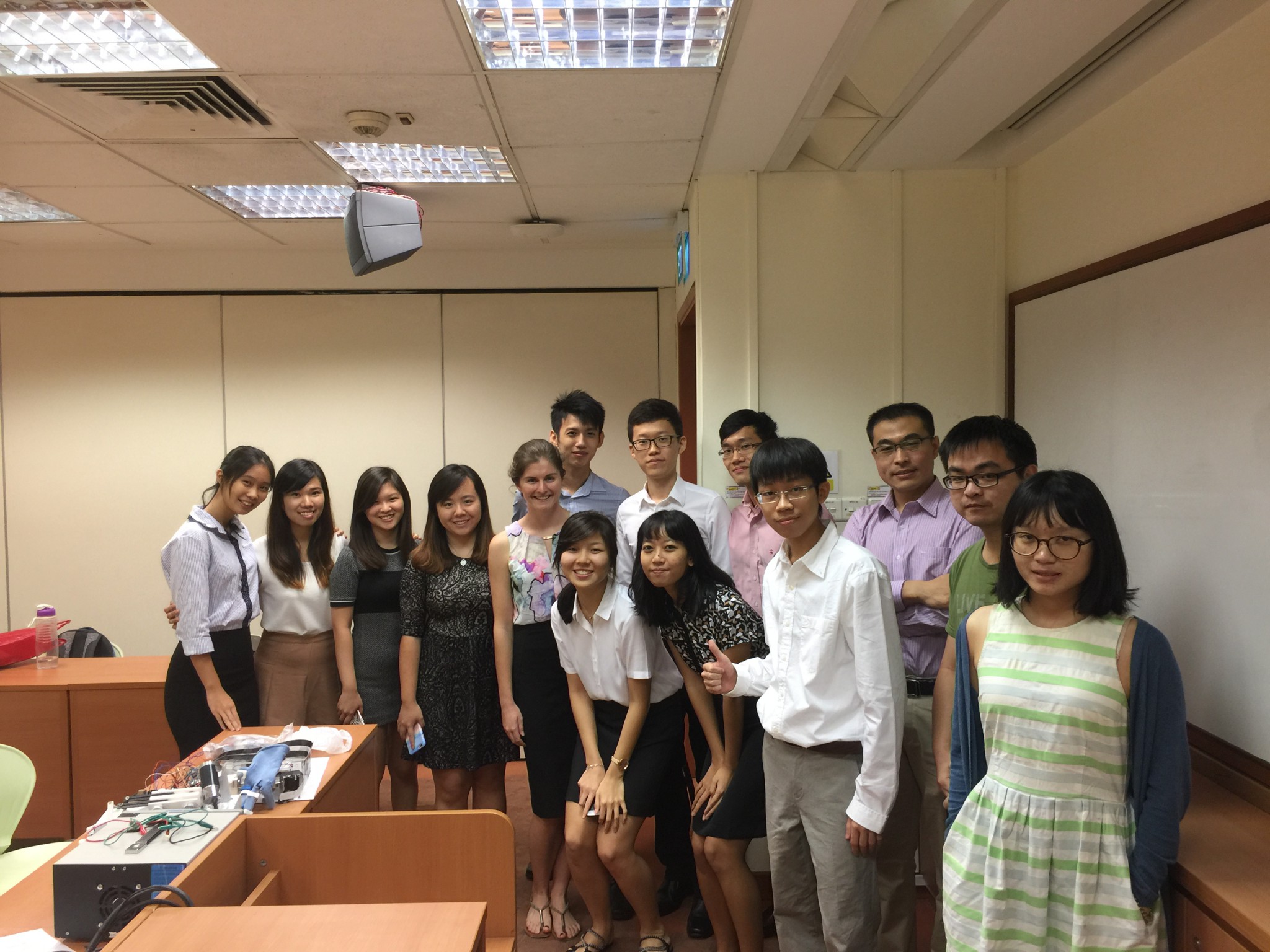
bn3101AY16-17Sem1

BN3101: Biomedical Engineering Design

Module Description :

Preparation of formal engineering reports on a series of engineering analysis and design problems illustrating methodology from various branches of applied mechanics as applied to bioengineering problems. Statistical analysis. A term project and oral presentation are required. Students are exposed to the entire design process: design problem definition, generation of a design specification, documentation, design review process, prototype fabrication, testing and calibration.

Note: Lecture to be conducted online. Students need to go through the lecture notes each week before attending tutorials.


Schedule & Tutorials

wk1: Background and clinical descriptions

Tutorial: Background introduction slides (HandExoskeletonIntro.pdf)
A pre-recorded video tutorial for the project introduction:

Selected videos (a playlist of video series):


In-house soft robotic hand

Reference in-house manipulators

wk2: Intellectual Property

Tutorial Agenda:

– Literature review slides – wk2-IP-Literature Review Of Biomimetic Wire-Driven Mechanisms for Swimming/Flying/Medicine (.pdf)

– Present the rough idea of your design concepts

– Do patent search, present &

Follow up actions:

  1. Search for 10 most relevant patents for your projects
  2. Generate keywords using these patents pertaining to your projects
  3. Generate a list of User specifications for your device using this list of 10 related patents. Hint: look for the various features of patented devices, and appreciate the intention of these features
  4. Create a table to compare the 10 patented devicesโ€™ features
  5. discuss/present the 3 (1 patent for every 2 members) most related ones for each group

References:

– You may search patents from www.google.com/patents or www.uspto.gov

– Patents filed by other groups (deflectable catheter US2013296781A1) | (arthroscope US2007179340A1 )

– Provisional patents filed to ILO by my research group FYI: (soft endoscopic robot) | (cable-driven flexible manipulator)

– How to tell if a patent has expired? It turns out not obvious and please refer to the following readings: Brown & Michaels – “How To Determine Patent Term” USPTO:Patent Term Calculator (Beta Version) Has a patent expired? – Part I

FYI only: Flipped class lectures:
– Week 2 breeze video lecture about IP study: https://breeze.nus.edu.sg/ip1

wk3: Design Methodology and Design Analysis

Tutorial Agenda (with tutors):
Follow the Design Methodology Slides and briefly identify:
– Role of each team member
– Procedure
– Project Plan Schedule
– Rough Needsโ€Metrics Matrix

FYI only: Deprecated Flipped class lectures:
– Design Methodology Slides by Prof Leo & Prof Chan: Design Methodology in Bioengineering
– Associated breeze video lecture (also accessible through IVLE): https://breeze.nus.edu.sg/p4ktu5izooe/

wk4: Risk Analysis, Design Rationale and Verification

Tutorial Agenda:
– Follow up with week-2 action items and progress update
– Follow the above slides in Design Rationale, Design Verification, and Risk Analysis, briefly/roughly identify:
– How to address “Anatomical Variations” issue
– How to address “User Needs, Product Scope, and Design Acceptance Criteria”
– Failure Mode, Cause of Failure, and Harms associated with your products

FYI only: Deprecated Flipped class lectures:
Risk Analysis Table[.docx]
Design Rationale and Design Verification 2014[.pdf]   breeze lecture (https://breeze.nus.edu.sg/p6obwzld267/)
Risk Management [.pdf]

wk5: Recap IP, Design Justifications, ASTM Assignments

Reference: 
– F1218 – 89(2014) : Standard Specification for Bronchoscopes (Rigid)
– F2726 – 08Standard specification for fixation devices for tracheal tubes and other airway devices
– ASTM F1992 – 99(2007) Standard Practice for Reprocessing of Reusable, Heat Stable Endoscopic Accessory Instruments (EAI) Used with Flexible Endoscopes
ASTM F1518 – 00 Standard Practice for Cleaning and Disinfection of Flexible Fiberoptic and Video Endoscopes Used in the Examination of the Hollow Viscera (Withdrawn 2009)
– Rebuttal documents by my research group FYI: (cable-driven flexible manipulator )

wk6: ASTM presentation

Tutorial

Reference News: the hand grasp testing will have international standard – check out here, which will be excellent references for you to set up your experiments after you have the prototype : http://www.nist.gov/el/isd/grasp.cfm

wk7: Mid-term Review

Dr. Ren: Presentation by Groups
– Presentation: 20 minutes for each group (15 presentation +5 QA)
– An extended/refined/polished/justified wrap-ups for the work done in the past 6 weeks, including introduction/background/clinical needs/markets/significance/SOA/gaps-to-fill; IP, design methodology/design analysis/rationale/verification; risk analysis; regulatory; prototyping;envisioned procedures/system etc.

wk8: Sterility Requirements & GLP

– Reference: Highly Biomimetic Design of a Muscle Glove (pdf from a RAL/ICRA 2016 submission 16-0311_01_ms)

wk9: Bioethics, Quiz, & Individual Project Update

Flipped online class: Bioethics (Bioethics and Medical Device.pdf)

Quiz:  1) 50 MCQs; 2) Duration is 1 hour, from 11am; 3) Quiz comprises of MCQs questions from weekly online assessments, and some new MCQs; 4) Closed-Book quiz

Tutorial:  Motorization (slides: MotorControl-Tutorial.pdf) & modeling (slides: tendon-driven-manipulator-kinematics.pdf).

wk10: Final Dry Run with Project Supervisors

wk11: Free Day for Team to Fix any problem with prototype


wk12: Final Oral Presentation of Project
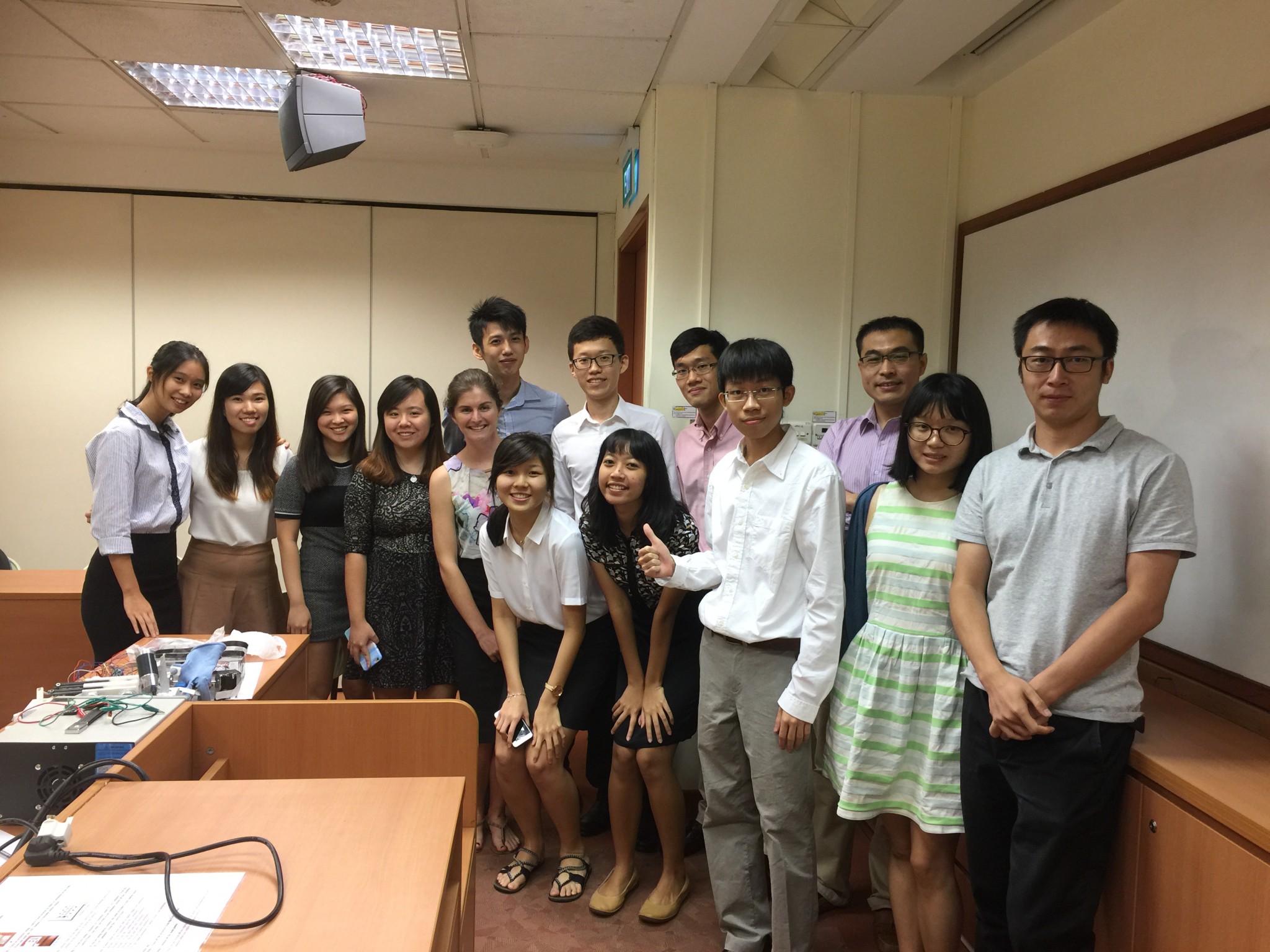
wk13: Submit prototype, reports and final project documents to project supervisor by 5 pm

Please submit soft copy of your report & project data and actual prototype to your respective supervisor. That is:

  • Physically: submit project prototype (including tools borrowed, make also sure the prototype is functional at the time of your submission.) to Dr. Ren
  • Electronically: (dropbox/google-drive or whatever ways preferred) submit to Dr. Ren your group-project development documents including:
    • – reports in .docx format
    • – project presentation files (ASTM and final) in .pptx or equivalents (please make sure the video(s) is playable in another PC if applicable);
    • – CAD design files (in solidworks or equivalents)
    • – if applicable, source codes and a readme file on how to run the code
    • – other key project data (e.g., verification experiment data collected in .xlxs), references including ASTM standards, patents cited, and reference papers, etc.

Further possibilities

Possibility of investing your project and extend it to competitions (Completely voluntary and please discuss with Dr. Ren if for possible further extensions/supports/funding):

  • A manuscript to IJRA or MBEC
  • Samsung Solve For Tomorrow Competition http://www.samsung.com/sg/solvefortomorrow/
  • The Design of Medical Devices Conference call for 2-page technical brief (by Nov. 9, pretty easy to get accepted and it can be just a summary of your group project). You only need to follow “the required Technical Brief Template (Word)” (2-page) and get my comments before submission. The benefit is that “All accepted papers will be published as a two-page Technical Brief in the June and September issues of ASME Journal of Medical Devices” after giving the conference presentations and this would be a pretty good record in your CV when you are looking for jobs.

Open source robotic hand projects


More information

Motion Planning of Flexible Manipulators by Learning from Human Expert Demonstrations

Abstract

Motion Planning of Multiple-segment flexible soft, and continuum Flexible Manipulators by Learning from Human Expert Demonstrations

Multiple-segment flexible and soft robotic actuators exhibit compliance but suffer from the difficulty of path planning due to their redundant degrees of freedom, although they are promising in complex tasks such as crossing body cavities to grasp objects. We propose a learning from demonstration method to plan the motion paths of flexible manipulators, by statistics machine-learning algorithms. To encode demonstrated trajectories and estimate suitable paths for the manipulators to reproduce the task, models are built based on Gaussian Mixture Model and Gaussian Mixture Regression respectively. The forward and inverse kinematic models of soft robotic arm are derived for the motion control. A flexible and soft robotic manipulator verifies the learned paths by successfully completing a representative task of navigating through a narrow keyhole.


Demo video at:


Publications

  • H. Wang; J. Chen; H. Y. Lau & H. Ren Motion Planning of IPMC Flexible Manipulators by Learning from Human Expert Demonstrations ICRA2016, IEEE International Conference on Robotics and Automation, 2016
  • J. Chen; H. REN & A. Lau Learning Reaching Movement Primitives from Human Demonstrations with Gaussian Mixture Regression and Stabilized Dynamical Systems International Conference on Control Science and Systems Engineering ICCSSE 2016, 2016
  • J. Chen; W. Xu; A. Lau & H. REN Towards Transferring Skills to Flexible Surgical Robots with Programming by Demonstration and Reinforcement Learning The Eighth International Conference on Advanced Computational Intelligence (ICACI2016), 2016
  • J. Chen; W. Xu; H. Ren & H. Y. Lau Automate Adaptive Robot Reaching Movement Based on Learning from Human Demonstrations with Dynamical Systems ROBIO2016, 2016

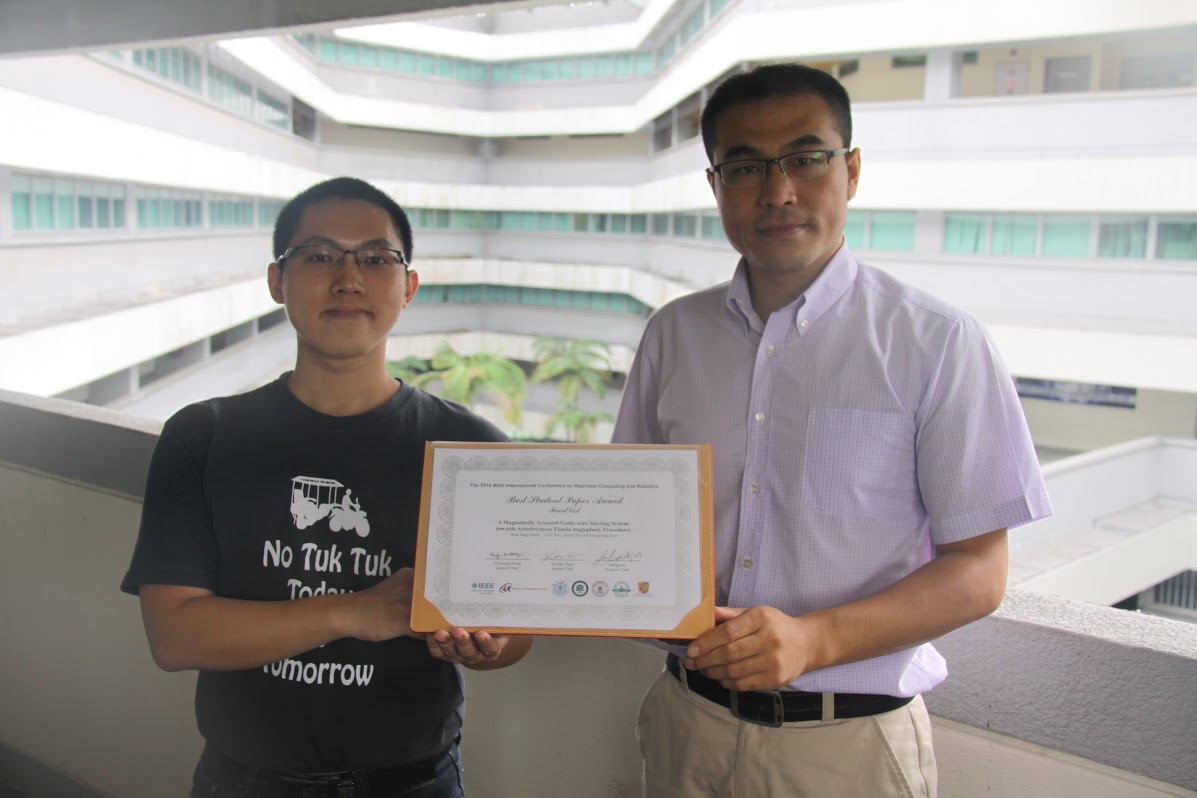
Best Student Paper for IEEE RCAR2016

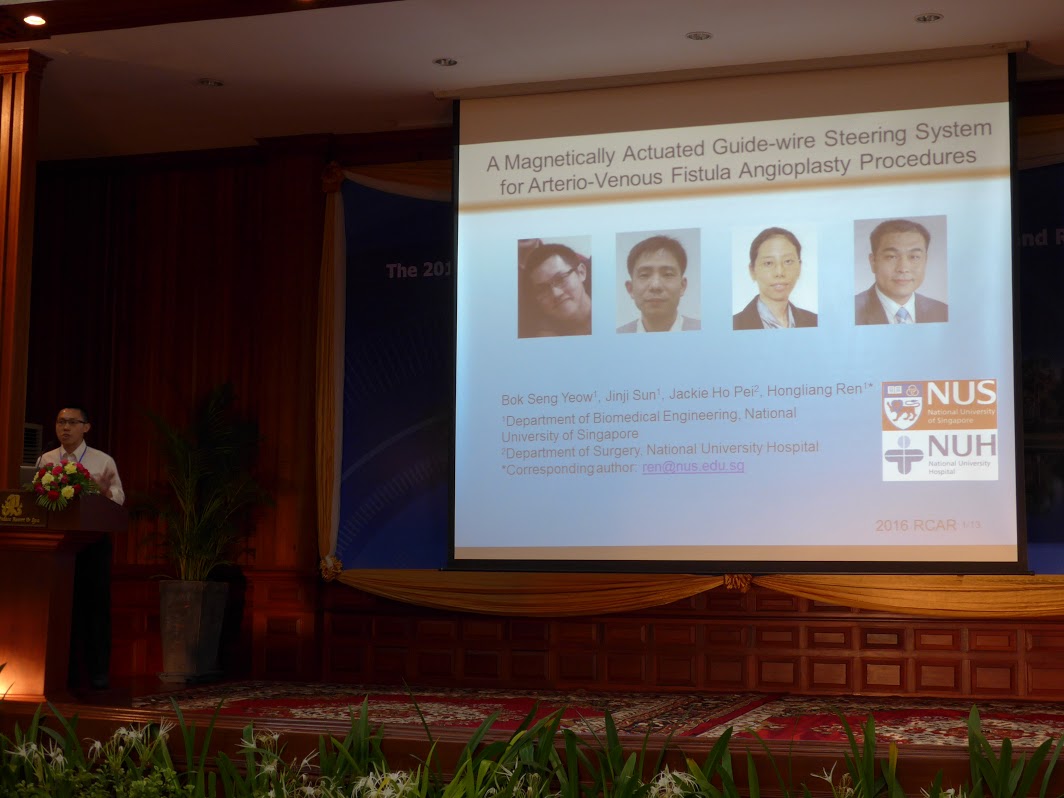
Our paper titled “Towards Magnetically Actuated Guide-wire Steering in Arteriovenous Fistula Angioplasty Procedures” was awarded for the Best Student Paper at IEEE Conference on Real-time Computing and Robotics (RCAR), June 6 to 10, 2016, at Angkor Wat, Cambodia.
RCAR-2

RCAR-IMG_5758

Ultrasound Assisted Guidance with Force Cues for Intravascular Interventions

Project Goals


Image guidance during minimally invasive cardiovascular interventions is primarily achieved based on X-ray fluoroscopy, which has several limitations including limited 3D imaging, significant doses of radiation to operators, and lack of contact force measurement between the cardiovascular anatomy and interventional tools. Ultrasound imaging may complement or possibly replace 2D fluoroscopy for intravascular interventions due to its portability, safety, and the ability of providing depth information. However, it is a challenging work to perfectly visualize catheters and guidewires in the ultrasound images. In this paper, we developed a novel method to locate the position and orientation of the catheter tip in 2D ultrasound images in real time by detecting and tracking a passive marker attached to the catheter tip. Moreover, the contact force can also be measured due to the length variation of the marker in real time. An active geometrical structure model based method was proposed to detect the initial position of the marker, and a KLT (Kanade-Lucas-Tomasi) based algorithm was developed to track the position, orientation, and the length of the marker. The ex vivo experimental results indicate that the proposed method is able to automatically locate the catheter tip in the ultrasound images and sense the contact force, so as to facilitate the operatorsโ€™ work during intravascular interventions.

Approaches/Results/Video

People Involved

Research Fellow: Jin Guo
Project Investigator: Hongliang Ren

Related Publications

TBA

Gold award in BES10SM Design Competition

Congratulations to the Gold award in the Biomedical engineering Society 10th Scientific Meeting (BES10SM) at Singapore, 14th May 2016, for our lab’s research led by FYP student, Yoew Bok Seng, on the project of Magnetic Robotic Intervention, for the design (undergraduate) category.

Best Paper Finalist award at CSCWD 2016 Conference

Our team’s research paper titled “Human-Compliant Body-Attached Soft Robots Towards Automatic Cooperative Ultrasound Imaging” paper was presented and shortlisted for the Best Conference Paper at 2016 20th IEEE International Conference on Computer Supported Cooperative Work in Design (CSCWD 2016), May 4-6, 2016, Nanchang, China.

Magnetically Actuated Guide-wire Steering

Project Goals


Guide wires are commonly used to assist surgeons during vascular surgery. Guide wires are usually the first to be placed, eventually allowing easy exchange of surgical tools to the target site. The surgeon has to manually control and manipulate the guide wire to the target region. This process is complicated by the tortuous nature of the vasculature and is made worse as the surgeon has limited vision (constant need to switch between overlay angiographs) and control over the guide wire tip (controlling the distal tip from the proximal end). For the first time towards minimally invasive Arteriovenous Fistula Angioplasty Procedures, we aim to improve the controllability of the in vivo guide wire via the attachment of a magnetic tip to the distal end of the guide wire, which under the control of external magnetic field generators can deflect the magnetic tip. This controlled deflection translates to the selection of entrance angle for the guide wire tip, affording distal control.
This is especially useful for navigating around stenosis which is common for patients with Arteriovenous(AV) Fistula. The repeated use of the fistula during dialysis has been claimed as a cause for the high occurrence of stenosis (due to tissue scaring from access). Fistulas and their grafts are however still preferred over other renal access in most situation due to its lower risk of infections. Our proposed system here can improve the controllability, safety and speed of current procedures and can enable AV-Fistula Angioplasty Procedures to be shifted to out-patient clinics.

Approaches/Results/Videos

People Involved

Student: Bok Seng Yeow
Research fellow: Jinji Sun
Project Investigators: Hongliang Ren, Jackie Ho

Related Publications

Yeow, B. S.; Sun, J.; Ho, J. & Ren, H. Towards Magnetically Actuated Guide-wire Steering in Arteriovenous Fistula Angioplasty Procedures IEEE Conference on Real-time Computing and Robotics (RCAR), IEEE, 2016, best student paper.

Body-Attached Soft Robot for Ultrasound Imaging

Project Goals

Ultrasound imaging procedures are deemed as one of the most convenient and least invasive medical diagnostic imaging modalities and have been widely utilized in health care providers, which are expecting semiautomatic or fully-automatic imaging systems to reduce the current clinical workloads. This paper presents a portable and wearable soft robotic system which has been designed with the purpose of replacing the manual operation to cooperatively steer the ultrasound probe. This human-compliant soft robotic system, which is equipped with four separated parallel soft pneumatic actuators and is able to achieve movements in three directions. Vacuum suction force is introduced to attach the robot onto the intended body location. The design and fabrication of this soft robotic system are illustrated. To our knowledge, this is the first body-attached soft robot for compliant ultrasound imaging. The feasibility of the system is demonstrated through proof-of-concept experiments.
softusprobe

Approaches/Results/Video

Developing a wearable soft robotic system (Figure 1), which is capable of mimicking the procedure of probe steering and optimizing the contact force and angle according to the specific conditions, has great significance of reducing the reliance of the ultrasound imaging on the experience of operators and obtaining images with high quality.

People Involved

PhD Student:ย Xiaoyi Gu
FYP Student: Koon Lin Tan
Project Investigator: Hongliang Ren

Related Publications

Ren, H.; Gu, X. ; Tan, K. L. Human-Compliant Body-Attached Soft Robots Towards Automatic Cooperative Ultrasound Imaging 2016 20th IEEE International Conference on Computer Supported Cooperative Work in Design (CSCWD 2016), IEEE, 2016, –

Positions for part-time undergraduate Research Assistants (RA)

The part-time research positions are to support a funded project on the study of a computer integrated surgery system. The successful applicants will involve hands-on development for surgical robot prototype or surgical navigation system study based on their backgrounds. The successful applicants will also be exposed to the other interesting research projects in surgical robotic system development.

Position Responsibilities:

Assist in the development of a computer integrated surgery system.
Closely collaborates with the PI and other research assistants throughout the study.
Write experiment reports.
Learn to manage the project.

Qualifications:

Prior clinical knowledge is not required but would be a plus.
Experience with mechanical design or computer programming.
Self-motivated.
Willing to learn and work independently.
Strong problem-solving, interpersonal, and analytic skills.
To apply, please email a detailed CV (including education background, courses, experiences, and skills) to:
Dr. REN, Hongliang

BN5209-6209 Neurosensors and Signal Processing/Neurotechnology AY15/16

BN5209/BN6209 Neurosensors and Signal Processing / Neurotechnology Semester 2, 2015/2016

SCHEDULE

Lecture Time:

  • Tuesday: 3 pm โ€“ 6 pm (EA-06-03)

Syllabus

Note: Information contained in this syllabus may be subject to change.

Week Topic
1
Jan12
Intro to the Course (NT)
Intro to Neurotechnology  (NT)
2
Jan19
Introduction of BioSignal Processing  (HR)
L1-CFT; L2-Stochastic Process/R.V./Moments/PSD
3
Jan26
Neural recording methods: Neural circuits, amplifiers, telemetry, stimulation (NT)
4
Feb2
Prepare Student Seminarspaper selection
Time-Frequency-Spatial Analysis  STFT (HR)
5
Feb9 (CNY)
Holidays
6
Feb16
Neural signals (clinical applications)- EEG, evoked potentials (HR)
Lab tutorial for Project I: Neural Signals and Analysis
Recess Feb22
7
Mar1
Multiple Dimensional  Signal Processing (HR)
Lab Project II: Application in neural systems
Student Reading Seminars (HR)
8
Mar8
Neuro Diagnostic and Therapeutic Devices by NT
9
Mar15
Brain machine interfaces  (NT)
EEG/ECoG
10
Mar22
Neuromorphic Engineering – Brain Inspired Robotics by SK
11
Mar29
Neuroimaging and Image Processing (HR)
Neuroimaging fMRI (HR)
12
Apr5
Advanced Neurosignal Processing / Neurosurgical systems (HR)
13
Apr12 (makeup)
Project Reports (due before final) & presentations (HR, NT)


Course Projects

1. EEG for brain state monitoring
2. EEG/EMG Feature Identification Extension

AIMS & OBJECTIVES

This module teaches students the advanced neuroengineering principles ranging from basic neuroscience introduction to neurosensing technology as well as advanced signal processing techniques. Major topics include: introduction to neurosciences, neural recording methods, neural circuits, amplifiers, telemetry, stimulation, sensors for measuring the electric field and magnetic field of the brain in relation to brain activities, digitization of brain activities, neural signal processing, brain machine interfaces, neurosurgical systems and applications of neural interfaces. The module is designed for students at Master and PhD levels in Engineering, Science and Medicine.

PREREQUISITES

Basic probability
Basic circuits
Linear algebra (matrix/vector)
Matlab or other programming
Recommended Textbooks: Neural Engineering, Edited by Bin He
Seminar papers

TEACHING MODES

The majority of the course will be in lecture-tutorial format. Some advanced topics will be in the formats of seminar and research presentations.

ASSESSMENT

Take Home Tests (5 for 50%)
Labs/Projects Reports + Presentations (20%)
Seminars (10%)
Take Home Final Exam(20%)