Prof. Pierre Dupont Delivers Faculty of Engineering Distinguished Lecture on Continuum Robotics

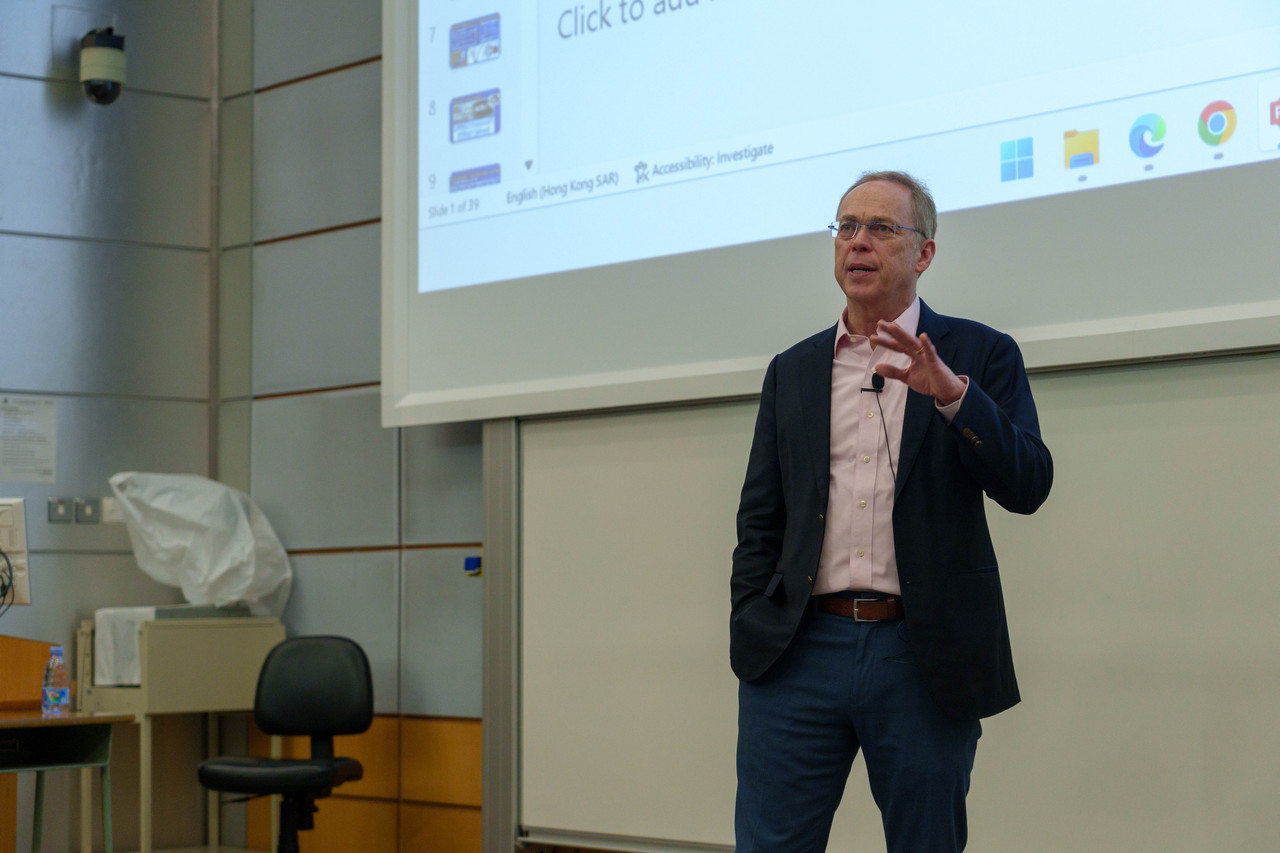
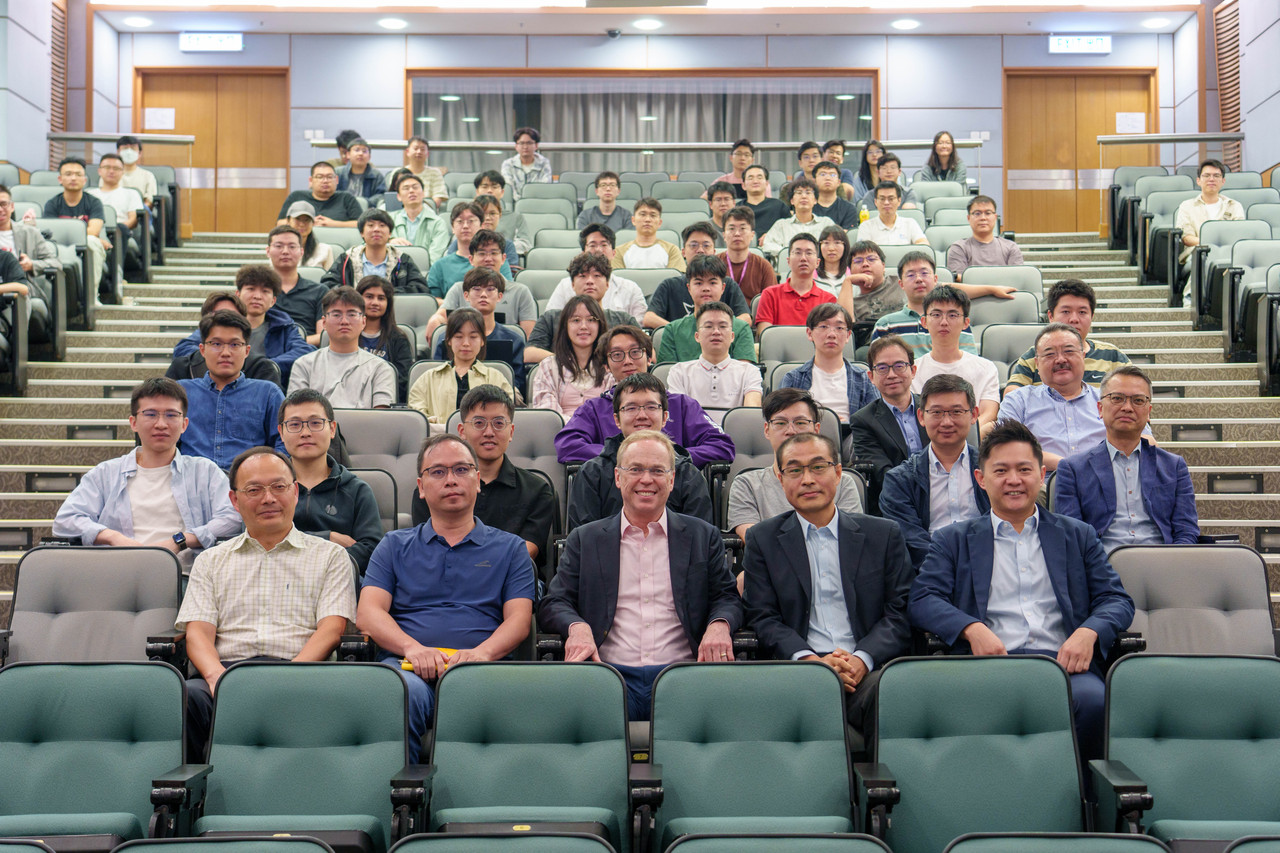
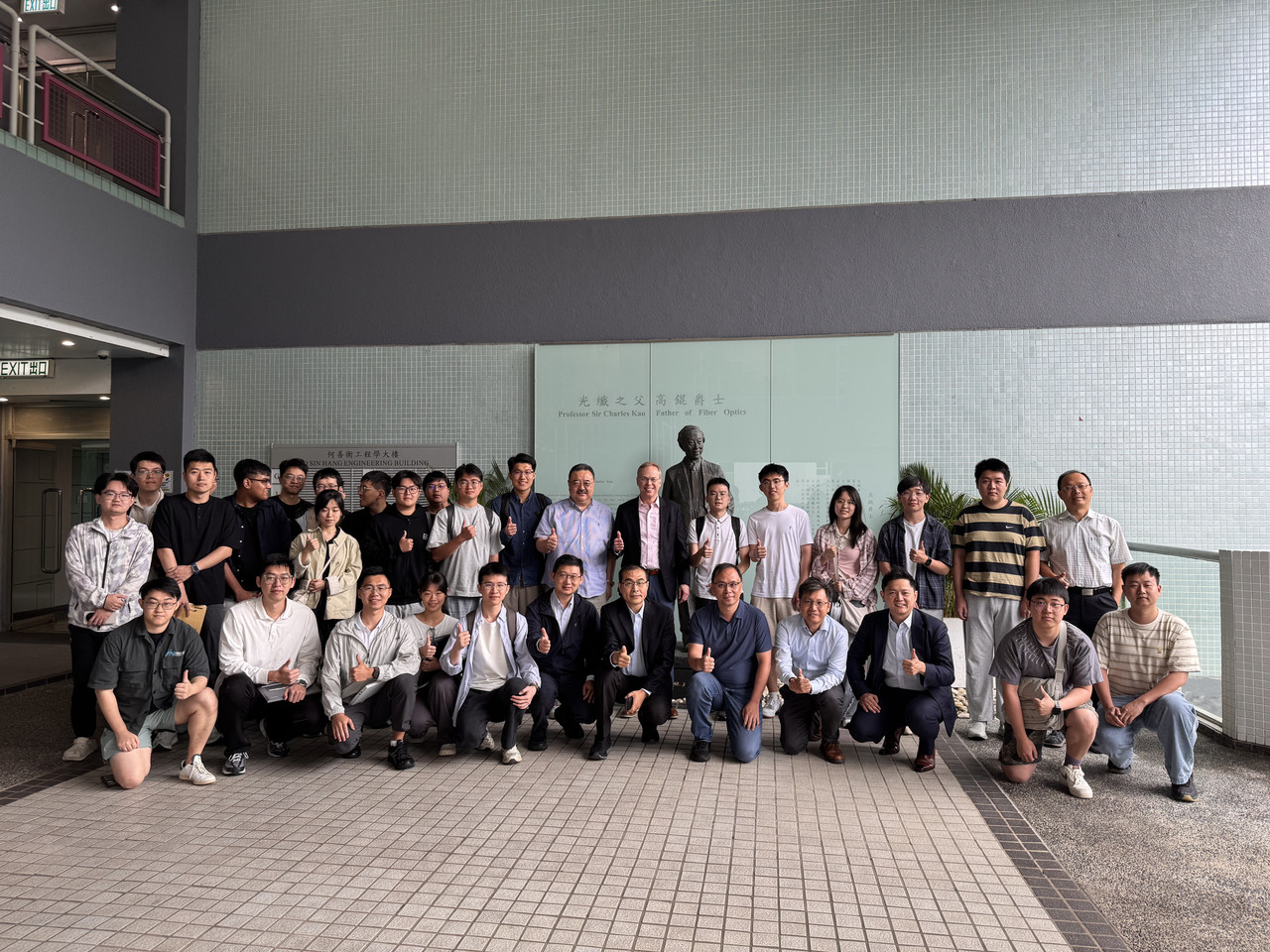
May 6, 2026ย โ€“ The research group of Prof. Hongliang Ren was pleased to host Prof. Pierre Dupont as part of the Faculty of Engineering Distinguished Lecture series.

Prof. Dupont is a Professor of Surgery at Harvard Medical School, Chief of Pediatric Cardiac Bioengineering at Boston Childrenโ€™s Hospital, and an IEEE Fellow. In his talk titled โ€œContinuum Robotics for Minimally Invasive Interventions: Design Tradeoffs for Clinical Applications,โ€ he presented an engineering perspective grounded in realโ€‘world clinical challenges.

Prof. Dupont discussed three complementary continuum robot architectures โ€“ concentric tube robots, magnetic ball chains, and tendonโ€‘actuated systems โ€“ each involving distinct tradeoffs in stiffness, steerability, force capability, and hysteresis.

Key highlights from the lecture:

  • Concentric tube robots enable precise intracardiac catheterization and bimanual neuroendoscopy.
  • Magnetic ball chains offer outstanding steerability for cardiac ablation procedures.
  • Tendonโ€‘actuated systems provide a balanced tradeoff between stiffness and dexterity for transcatheter heart valve repair.

The lecture illustrated how tailoring robotic designs to specific clinical constraints can meaningfully expand the capabilities of minimally invasive interventions.

Short bio of Prof. Pierre Dupont

Prof. Dupont received his B.S., M.S., and Ph.D. in Mechanical Engineering from Rensselaer Polytechnic Institute. He was a Postdoctoral Fellow at Harvard University, later a Professor of Mechanical and Biomedical Engineering at Boston University, and is now Chief of Pediatric Cardiac Bioengineering at Boston Childrenโ€™s Hospital and Professor of Surgery at Harvard Medical School. He is an IEEE Fellow, a former Senior Editor for IEEE Transactions on Robotics, and a member of the Advisory Board for Science Robotics.

Audience engagement

The lecture attracted faculty members and students from engineering and medical backgrounds, followed by a lively Q&A session. Attendees appreciated Prof. Dupontโ€™s clinically driven approach to robotic design, and the discussion continued informally after the talk.

RENLab Visits The Third Affiliated Hospital of Sun Yat-sen University for Embodied Medical Robotics Academic Salon

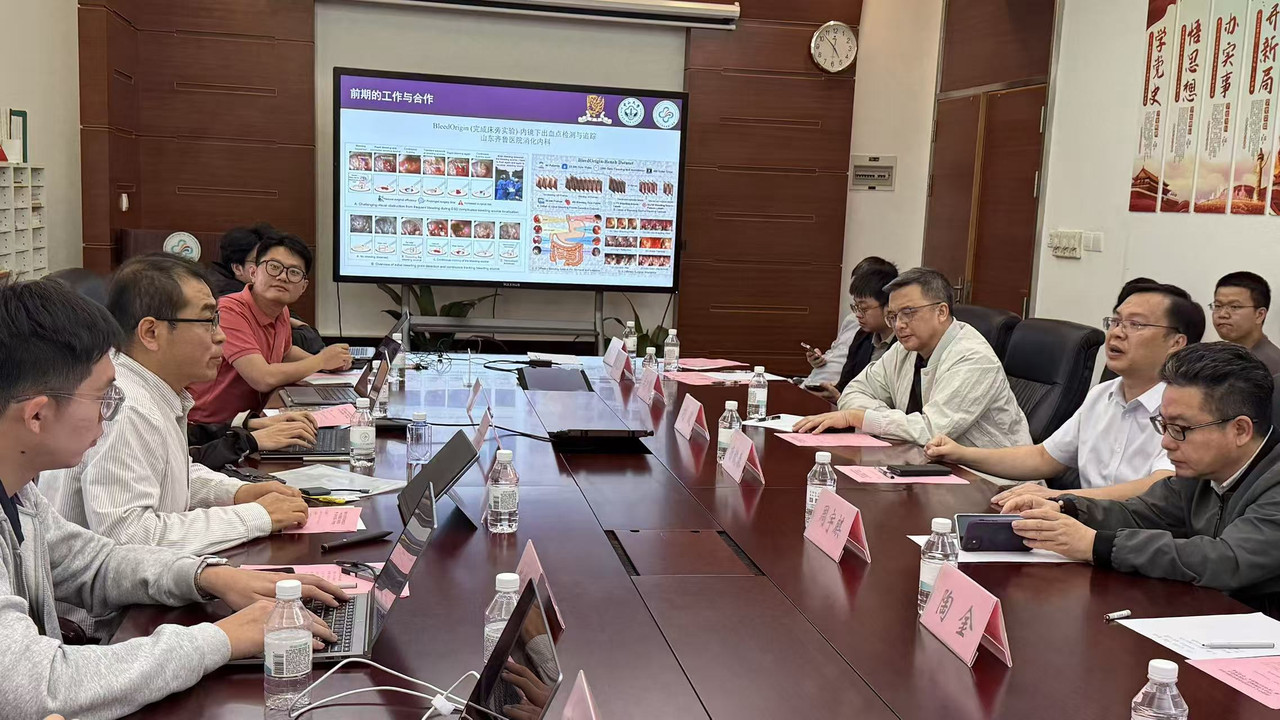
On the afternoon of April 24, 2026, Professor Hongliang Renโ€™s research team from The Chinese University of Hong Kong visited The Third Affiliated Hospital of Sun Yat-sen University (SYSU Third Hospital) to hold an academic symposium and salon on Embodied Medical Robotics. The event was held in Conference Room 2006 of the Comprehensive Building, aiming to advance academic communication and potential research collaboration in medical robotics and intelligent healthcare.

The meeting was chaired by Dr. Liu Zifeng, Director of the Big Data and Artificial Intelligence Center of SYSU Third Hospital. Vice President Qintai Yang delivered a welcome speech, introducing the hospitalโ€™s clinical strengths and looking forward to close cooperation in medical robot research and translation.

Professor Hongliang Ren delivered a keynote report on minimally invasive flexible robotic systems and embodied intelligence in medicine. Members of his research team then presented recent advances in precision interventional tools, magnetic robotic systems, endoscopic intelligent navigation, autonomous surgical control, and medical image perception, showcasing the teamโ€™s innovative work in clinical-oriented medical robotics.

During the discussion session, clinicians and researchers from multiple departments of SYSU Third Hospital had in-depth exchanges on clinical demands, technical applications, and joint research plans. Both sides reached positive consensus on future cooperation in scientific research, talent development, and clinical translation.

At the end of the meeting, Vice President Qintai Yang delivered a concluding speech and spoke highly of this academic exchange. This symposium effectively bridged engineering research and clinical practice, and laid a solid foundation for the future development and application of embodied medical robotics.

About The Third Affiliated Hospital of Sun Yat-sen University

The Third Affiliated Hospital of Sun Yat-sen University was founded in 1971 and is a comprehensive Grade-A tertiary hospital directly administered by the National Health Commission of China. As a major clinical teaching base of Sun Yat-sen University, the hospital undertakes medical care, education, research, prevention, rehabilitation, and specialist training. It currently operates four campuses: Tianhe, Lingnan, Yuedong, and Zhaoqing. The hospital has developed distinctive strengths in liver disease, brain disorders, and immune-related diseases, supported by national key disciplines and national clinical key specialty programs. It is also recognized as a Guangdong High-level Hospital and serves as an output hospital for the development of national regional medical centers.

Prof. Ren Delivers an Invited Talk at HKUST AIoT for Healthcare

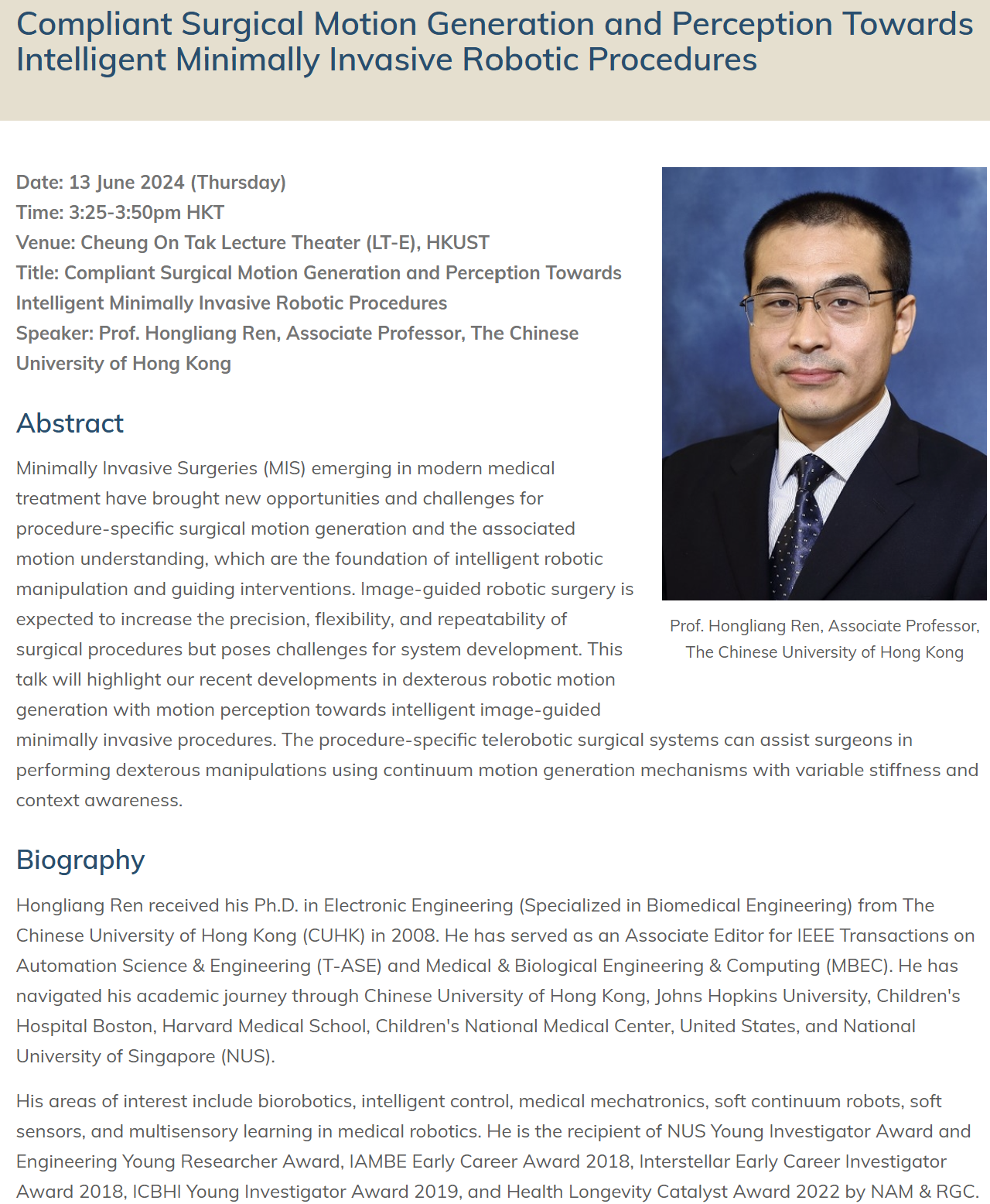
June 13, 2024 โ€“ Prof. Hongliang Ren of CUHK is invited to speak at the Artificial Intelligence and IoT for Healthcare 2024 workshop held at The Hong Kong University of Science and Technology (HKUST). He gives an invited talk entitled โ€œCompliant Surgical Motion Generation and Perception Towards Intelligent Minimally Invasive Robotic Procedures.โ€

Prof. Ren shares recent advances in compliant surgical motion generation and motion perception for intelligent image-guided minimally invasive robotic procedures. His talk highlights how procedure-specific telerobotic surgical systems can assist surgeons in dexterous manipulation through continuum motion generation mechanisms with variable stiffness and context awareness.

Prof. Ren also joins the afternoon panel discussion with other invited speakers and experts, exchanging views on the future development of AIoT technologies for smart healthcare and medical robotics.

This talk reflects Prof. Renโ€™s continuous efforts in medical robotics, soft continuum robots, multisensory perception, and intelligent systems for next-generation minimally invasive surgical procedures.